 |
  |
 |
|
published: November "1990"
Jimi's
Best Concert Tapes |
 What's New
& Preview Jimi's Prediction ?
A Remote View About Jimi Hendrix Timeline Blog Asteroid Impact Evolution Woodstock Blues Jimi Code VS. Da Vinci Code Credit Thefts Missile Agency/Moon Base Charade Remote View Mutation Seattleland Censorship Events Skewed Science Search Engine Rankings Download An Ad AT&T: New Nuremberg Wall(y)flower Syndrome Rochester Media DVD/CD Store More Links... 
The article below was
originally published in the November 1990 issue of Guitar
School Magazine, with an introductory note by the editor:
The
story we're really excited about is Michael Fairchild's meticulously
researched expose on Jimi's live music. This article is a must for
Hendrix fans. Fairchild, a brilliant player and writer, takes us on a
tour of more than 100 audience-made Hendrix concert tapes and provides
vital information. Discovering new Hendrix music is the rock equivalent
to finding the Holy Grail, and Mr. Fairchild has apparently hit the
jackpot. -
Brad Tolinski - editor
This was the first report to present a
comprehensive study of Jimi's hundreds of unknown live recordings. Up
until 1990, when the article came out, only a handful of people had
gathered the Hendrix concert tapes, and even fewer were able to assess
them all from a musician's perspective and report the details shown
below.
UNKNOWN
HENDRIX
by Michael Fairchild
Jimi Hendrix was constantly improvising, so it is no surprise that his concert work is so radically different from - through no less inventive - his painstaking studio creations. As in the jazz tradition, his interpretations of certain songs changed and evolved from one concert to another depending on the ambience of his surroundings. Even the most casual listener will detect differences between, say, any of the six versions of Red House performed on Hal Leonard's Variations On A Theme: Red House; some, perhaps, wouldn't even identify the sextet as being the same song! "You get off in another way with all those people there. You get another feeling and you mix it with something else that you get. It's not the spotlights, just the people. So much depends on the audience." - Jimi
Jimi's stage music was a reflection of both his and his audience's moods distilled through an extremely fragile and erratic amplification system. The signal from his guitar could be manipulated only while it was happening. Because of the unsophisticated nature of his Strat/Marshall/Fuzz Face/wah-wah rig, it was impossible for him to create feedback in the same way twice. These conditions - combined with Hendrix's continuous flow of masterful melodic improvisations - resulted in concerts that featured uniquely composed guitar symphonies on a nightly basis. Hendrix's wild and highly original performances beg for some sort of comprehensive evaluation. Between September 24, 1966, when Jimi arrived in London, and four years later when he died there on September 18, 1970, he made approximately 560 official appearances. To date, 115 of those performances have surfaced in whole or in part on recordings of varying sound quality. Anyone who makes the effort to analyze and digest all of the music from these tapes will quickly learn that classifying Jimi's concerts as either "bad" or "good" is futile. For example, of the 115 concerts I've studied, I would label only one as a "bad show" (that being the aborted show in Arhus, Denmark on 9/2/70), and even then, he performed a stirring, one-of-a-kind intro to "Land of the New Rising Sun." Although there are many shows which can be described as "first rate" from beginning to end (great examples include Baltimore 6/13/70, Ottawa 3/19/68 and Sacramento 4/26/70), it is preferable to evaluate the songs individually when rating these concert recordings.
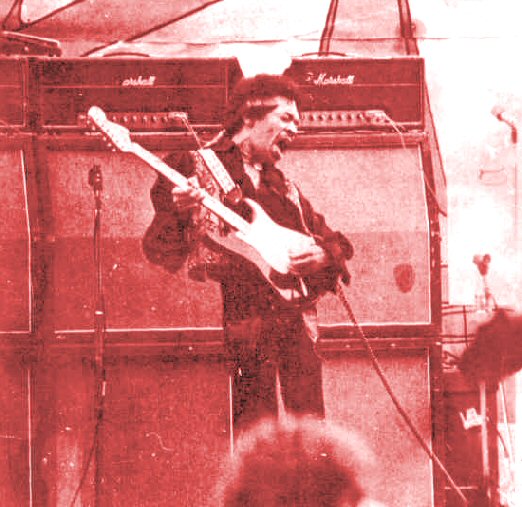
Sacramento
Cal Expo 1970
Unfortunately, Jimi frequently attained super-human musical flights when the only recording equipment present was a hand-held deck in the audience; anyone attempting to make a serious evaluation of his music therefore faces the problem of performance quality vs. recording quality. For example, I know a guitarist who says Jimi is his primary inspiration. He buys all of the officially released CDs and albums. But when I try to tell him that the audience-made tape from Chicago (12/1/68) features a version of Killin' Floor that makes the Winterland Rykodisc "official" version sound like Minni Pearl on Quaaludes, his only concern is whether or not the Chicago tape has "perfect sound quality." All I can say to that guitarist and others like him is, it's your loss. Other than Jimi Plays Monterey (Reprise), Woodstock (MCA), Band Of Gypsys (Capitol), and several other multi-track shows (i.e. the Berkeley concerts), the very best of Jimi's live music exists only on audience-made tapes. For example, if you want to be thrilled by a live All Along The Watchtower, Jimi's finest versions are on the audience-made tapes from San Bernardino (6/20/70) and Boston (6/27/70). Both versions sizzle, despite the shaky quality of the recordings. So to those Hendrix-curious readers willing to brave the perils of tape hiss to hear some of the Strat master's greatest riffing, read on, 'cause this boot's for you!
All
Along the Watchtower the best known concert performance of this
song
(despite the poor recording sound quality) - San Bernadino, June 20, 1970 AUDIO:
All Along the Watchtower best known
concert performance of this song
(despite the poor recording sound quality) - San Bernadino '70 (4:50 .mp3 file 8.85 MB) San
Bernadino Review of June 20, 1970 Concert
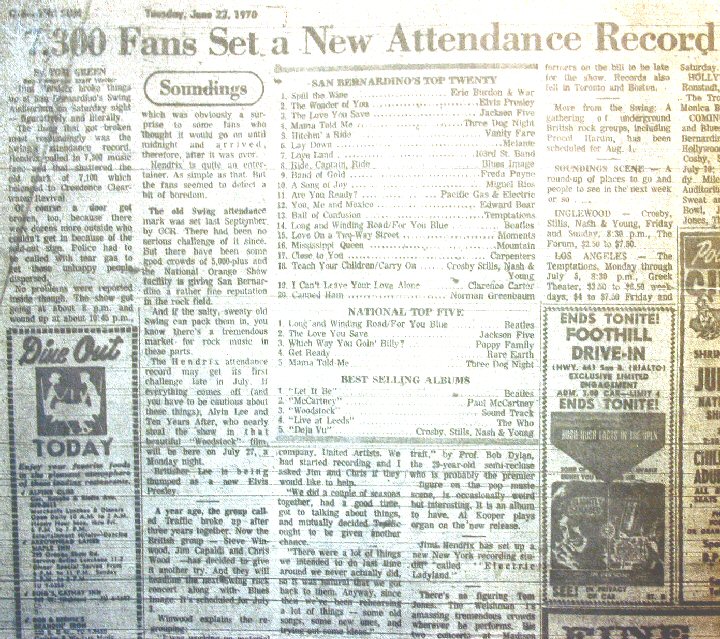
"Jimi Hendrix broke things up at San Bernadino's Swing Auditorium pm Saturday
night - figuratively and literally. The thing that got broken most
resoundingly was the Swing's attendance record. Hendrix pulled in 7300
music fans and that shattered the old mark of 7100, which belonged to
Creedence Clearwater Revival. Of course a door got broken too, because
there were dozens more outside who couldn't get in because of the
sold-out sign. Police had to be called with tear gas to get those
unhappy people dispersed. No problems were reported inside though. The
show got going at about 8 p.m. and wound up at about 10:45 p.m., which
was a surprise to some fans who thought it would go on until midnight
and arrived, therefore, after it was over. Hendrix is quite an
entertainer. As simple as that." - Tom Green, San Bernadino
Sun, June 23, 1970
All
Along the Watchtower - Boston, June 27, 1970
1969 TOUR OF
EUROPE
Bassist Noel Redding said of the January 1969
Experience tour of Europe, "On the whole, I can't understand how anyone
who saw us could have liked the group. Jimi was sullen and removed,
rarely bothering to sing. The sparkle was gone, gone, gone. We were
very tired and very bored, and it showed."
The Experience (featuring Hendrix, Redding, and drummer Mitch Mitchell) did have a strenuous schedule for that tour, usually performing two shows a night in 14 cities over a two-week period. In addition, just prior to the tour, the band's equipment truck was stolen in London and the Experience lost most of their gear. When they arrived in Gothenburg, Sweden on January 8, they faced the prospect of breaking in brand-new equipment on stage.
Film
Clip of First Song of the Tour -
Gothenburg, Sweden, Jan. 8, 1969 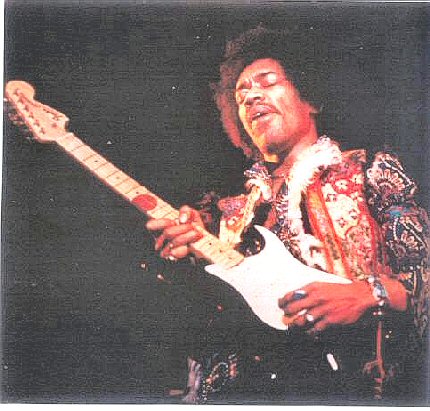
Copenhagen,
Denmark-Jan. 1969
Miraculously, 15 of the 25 concerts have survived on recordings from those pre-cassette days with sound reproduction quality ranging from excellent to wretched. While it's true that the shows recorded during the first two nights are pretty bland, Jimi suddenly comes alive and sustains a groove of superhuman mania throughout a Copenhagen concert recorded on January 10,1969. Of particular interest is the song Taxfree. At present, only nine live versions of the song have been collected, and the Copenhagen version is arguably the best. In addition to its complex flamenco-jazz movement, and viola sounding bow sustains, this Taxfree contains the very earliest recorded examples of two-handed tapping (later popularized by Eddie Van Halen - i.e. Eruption - hear recording on Youtube clip below). Judging from the intensity of his improvisation, it seems probable that Jimi invented this liquid trilling technique right on the spot. The Copenhagen '69 recording also features an epic, spaced-out, rendition of I Don't Live Today, and a Purple Haze whose spine-tingling ending rivals the Woodstock version.
.
Copenhagen
'69 - I Don't Live Today - guitar as viola at 5:38
Copenhagen '69 Taxfree - jazz jam w/two-handed tapping
at 8:15
Copenhagen '69 Purple Haze - check out the ending at 4:04
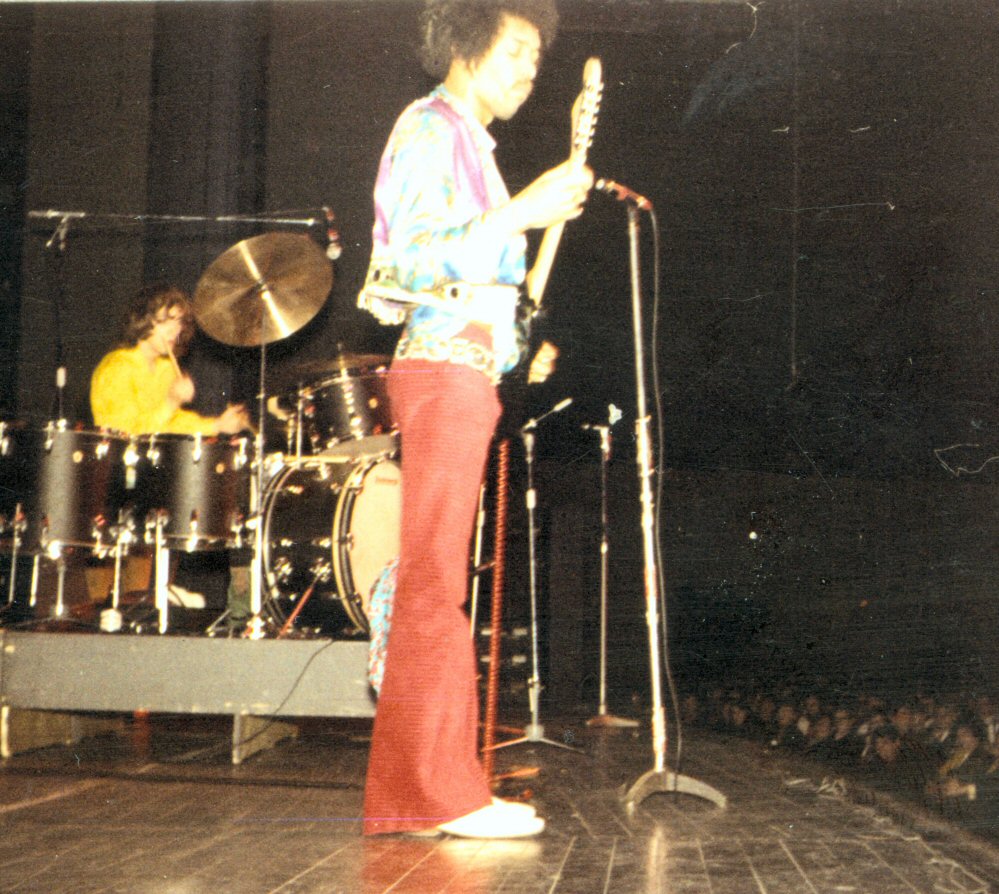
Frankfurt,
Germany - Jan. 1969
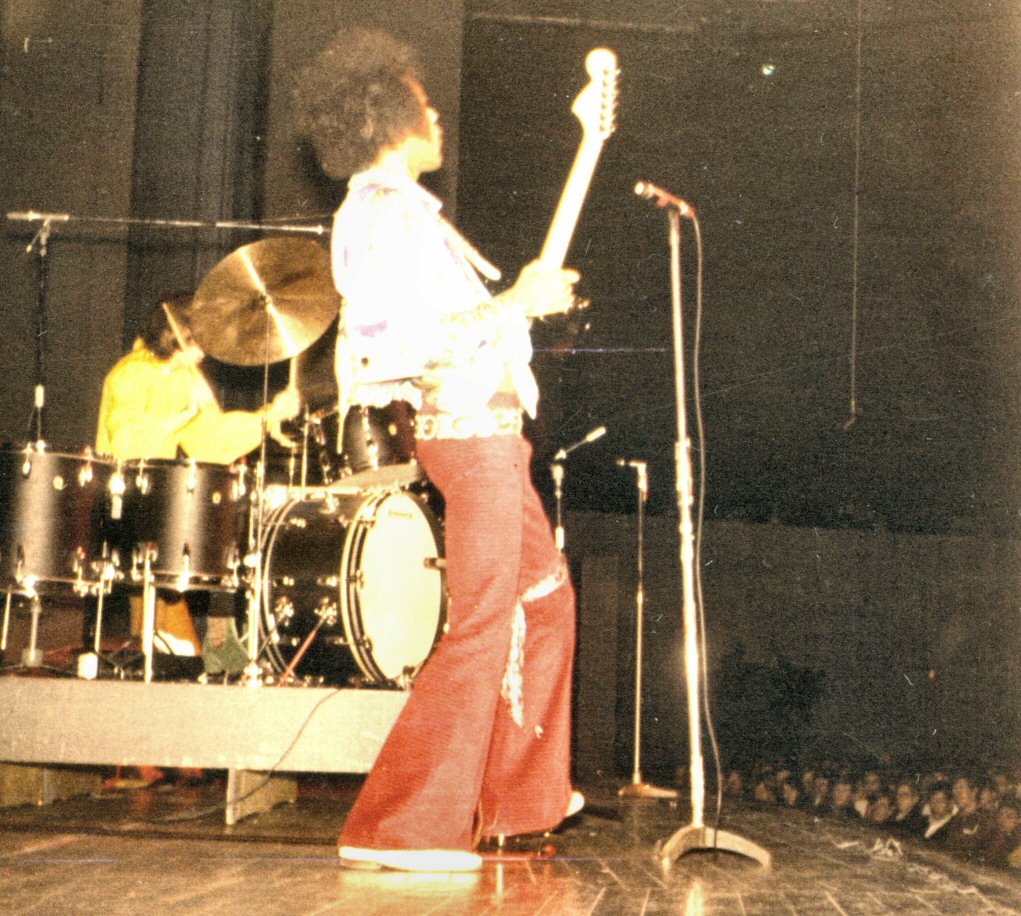
Frankfurt
"Jahrhunderthalle"
If Jimi's art mirrored his environment, he must he must have been close to heaven in Frankfurt; of the 56 collected versions of Red House, the Frankfurt rendition stands with the three finest. I Don't Live Today is also among the best three of 30 known versions (it's also the longest). Little Wing features the most complex embellishments of the seven known versions, and Come On Pt. 1 is the best of seven collected versions. This concert is a must for fans.
AUDIO:
Red House Frankfurt version (12:34 .mp3 file 23 MB)
"Jimi Hendrix Experience: this means musical
balance, a way upwards, and adaptation of many different styles of
guitar: blues, rock, gospel, soul, and concrete music in one.
Enormously electrified, amplified by huge loudspeakers, distorted by
modulations going head over heels, an ecstatic divine service is taking
place on stage, a service that comes down to a fight with the
instrument, moreover a conquest, with the obstacles being swept away,
plucked, torn. The guitar shows what it can do, and Hendrix is the
master. Musically he reaches far beyond the listening habits of his
audience who is familiar with occidental harmonies...and his generally
young public honors every varient with ecstatic applause...This is
utopian music, very close to Free Jazz and 'Musique Concrete.' How else
can we interpret the sound convulsions?...Into the droning of the
instruments he throws code signals, key sentences which enlighten his
own mentality as well as his audience's, who, in its enthusiasm,
understands it all. Thus the event develops finally into an exorcism,
into a future utopian sound painting, synthetic and abstract like the
world that is to come...This aspect lifts Hendrix and his two musicians
above the usual rock and beat groups. Here we can hear music which one
day will enter the history of music as a revolution like bop or free
jazz."
Wolfgang Vogel -
Frankfurter Rundschau - Jan. 20, 1969
I
Don't Live Today - Frankfurt 1969
Little
Wing & Foxy Lady - Frankfurt 1969
I
Don't Live Today - 1969
[NOTE: Years later, after Microsoft's Paul Allen arranged to destroy my career at the Hendrix company, the people who were given my job there used this Guitar School article as a blueprint for promoting the concerts that I single out here as exceptional performances. Today we can hear Jimi's Frankfurt recording, along with other live recordings described in this article (L.A. Forum 1970, San Jose 1969, Baltimore 1970, etc., etc.), featured on the Hendrix company website's "Digital Network" section, with comments claiming the relative specialness of these concerts over other shows by Jimi. But the people who run that website will never acknowledge that their decision to showcase these performances results from my Guitar School article. The truth is that they truly don't know the difference between a musically outstanding Hendrix performance and an average performance, so they lifted the insights from this 1990 Guitar School article, written while I was employed at the Hendrix company, yet they are careful to deny and conceal my influence in their decisions.] 1969 TOUR OF AMERICA From April 11 to June 29, 1969, the Jimi Hendrix Experience toured through 25 American cities. They were the most in-demand and highest-paid touring band at that time. In my evaluation, the 12 concert recordings that have survived from this period represents the band's stage music at its most evolved. Jimi's instrumental work attains a startlingly new logic, balance, and resolution. Never before, nor since, has a rock musician so single-handedly broken so much ground with such stirring sophistication and grace. Memphis, TN - April 18, 1969 8mm w/Sound
Los Angeles, CA - April 26, 1969 8mm w/Sound
Toronto,
Canada - May 3, 1969 8mm w/Sound
16 seconds of Foxy Lady. Jimi was busted for drugs on his way to this show. Baltimore,
MD - May 16, 1969 8mm w/Sound
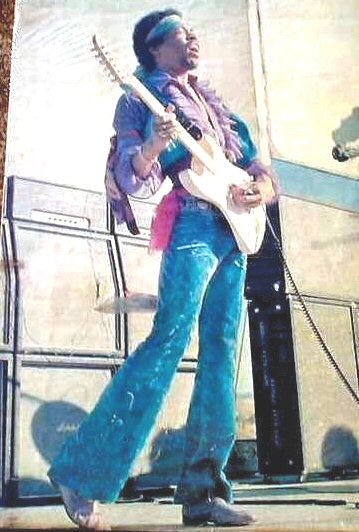
San
Jose Pop Festival - May 1969
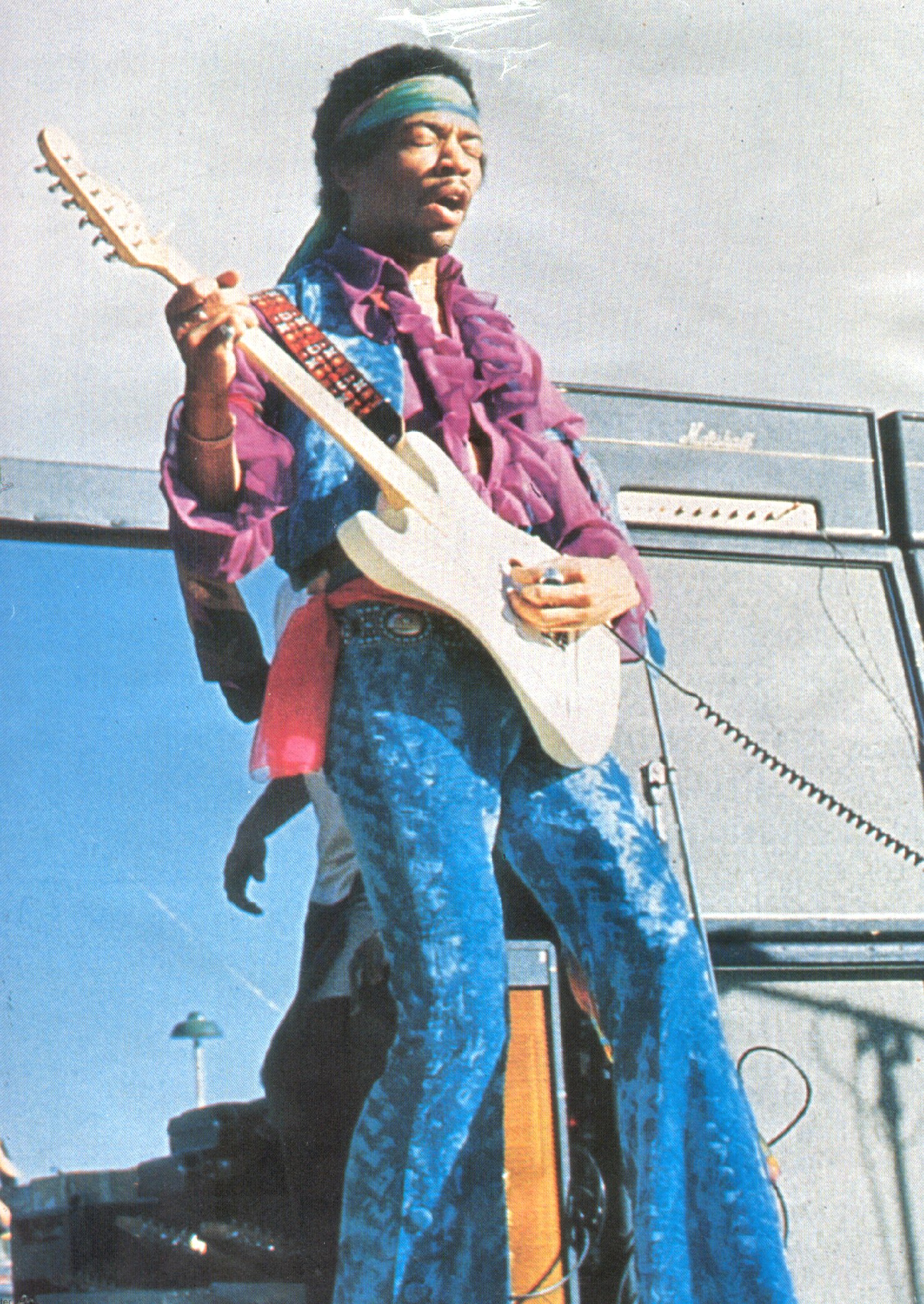
Northern
California Folk & Rock Festival
"The king of rock held court here yesterday afternoon, sending nearly 20,000 of his subjects into stunned, delicious rapture...at the Northern California Folk Rock Festival at the Santa Clara County Fairgrounds...[Hendrix] belted out the blues sound that won him Billboard Magazine's artist-of-the-year title this year.He played it hard, soft, slow, fast, cooking and wailing up and down with a thunder beat that brought the entire audience to its feet surging to the stage...Thousands stood arms flung skyward, both hands flagging the "V" peace symbol...Hendrix did strange magical things to his followers. He just barley worked up a sweat singing and playing seven long sets, including his hit tune Purple Haze. 'I'm going on the road, make a pile of dough, come back and buy this town and put it in my shoe,' he sang. And with a few more performances like Sunday's Hendrix might not be kidding. Totally pacified, whether by pot, blazing sun, or the rumble of sound from what must be the largest outdoor stereo system ever assembled, the onlookers stood in rapt attention or jived in place...Most fans preferred just to savour each of the heady notes and cried out for more." - San Jose Mercury News, May 26, 1969
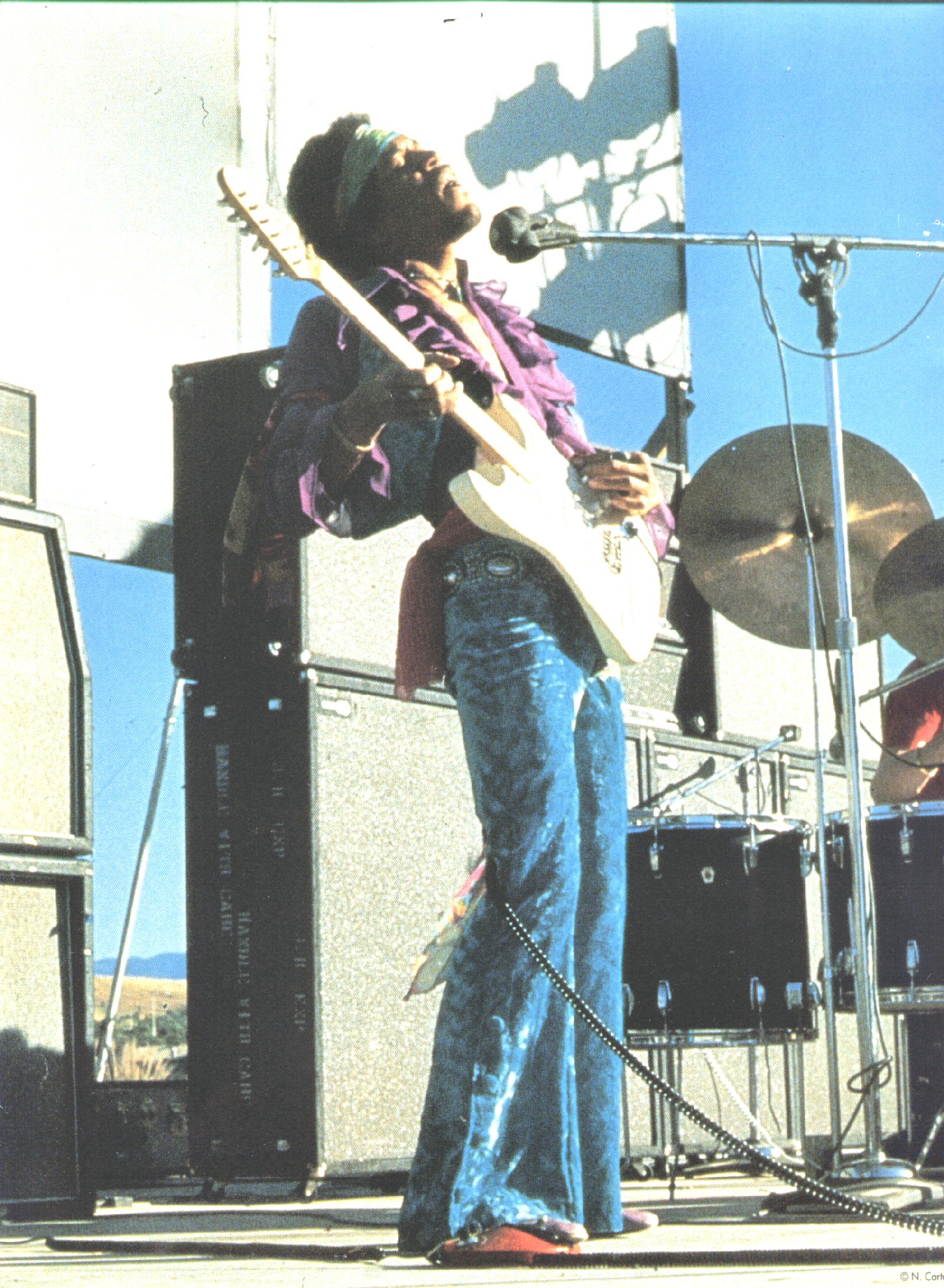
Santa
Clara County Fairgrounds
"The first time I saw Jimi was at the Santa Clara Fairgrounds in San Jose. It was probably the most incredible concert I ever heard in my life. I have never heard him play better after that. The show was absolutely incredible. Jimi was at the peak of his art, at one moment he would get caught inside a proton or a neutron and the next minute he would throw you to the Milky Way. I've never been exposed to that drastic form of expression. Somebody actually recorded it that day. I listen to it and I'm still blown away. You can hear all these waves of spirits crying through his guitar. We were like - 'Oh my God! How can he do this?' It was scary, I had never heard anybody express electric music the way he did that day. It was incredible to be assulted with all these screaming winds. He would really control that instrument like a jazz player or a blues player would. It was like controlling a demon and making it sing." - Carlos Santana (Straight Ahead, June 1994)
JHE Film Scenes with sound from San Jose - May 25, 1969
I Don't Live Today at San Jose Pop Festival
Spanish Castle Magic at San Jose Pop Festival
Red House at San Jose Pop Festival
Newport Pop June 20, 1969 - Fire
Newport June 22 All Star Jam 8mm Film
with sound
Newport June 22 AllStar Jam 16mm Film with sound
Denver Pop Festival June 29, 1969 8mm
Film with concert audio,
It Starts with Tear Gas Scenes, From a Riot That Broke Out During Jimi's Last Show with the Original "Experience"
A BAND OF GYPSYS - NEW YEAR CONCERTS
In 1968 Fillmore East owner Bill Graham declared his distaste for Jimi's stage
antics. Legendary critic Ralph Gleason quoted Graham saying to Hendrix,
"You got on the bloody stage and you gave them the tongue, and you
socked it to that girl and she wet her pants...but what did you give
her? Does she know that you really know something about phrasing slow
blues?"
So no one was surprised when reports of a
confrontation between Jimi and Graham were filtered through the press
following four Band Of Gypsys' concerts
(featuring Hendrix, bassist Billy Cox, and drummer Buddy Miles). The
BOG performed two sets at Graham's Fillmore East on New Year's Eve
1969, and two sets the next night for New Years Day 1970. In Graham's
own words, his rap at Jimi went like this: "[Jimi] played the first
set. And we were changing audiences from the early show to the late
show...And he said, 'What'd you think?' I said, 'Well, you were one big
giant shuck, man...You were a shuck from the beginning to end...you
humped the guitar and put fire to it and you stuck it behind your back
and you picked it with your teeth...you did everything except one
thing: You forgot to play! You stunk." According to
legend, Jimi performed the remaining three shows stock still. Parts of
these "stock still" performance were eventually released as Band
Of Gypsys (Capitol).
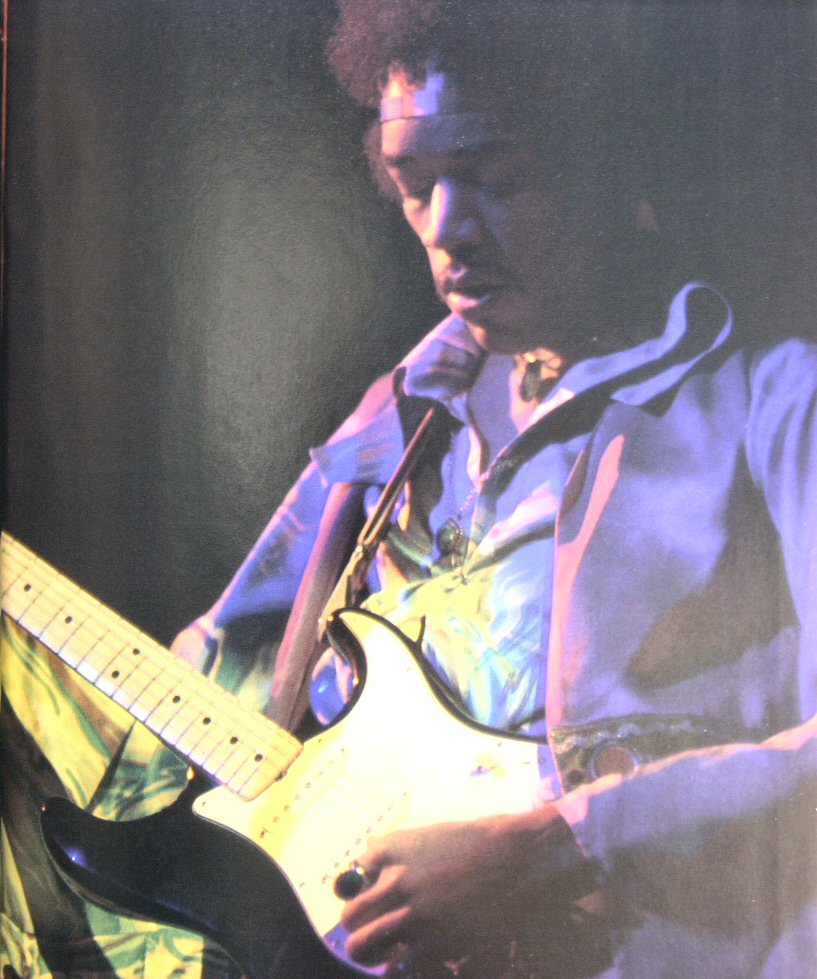 [NOTE: The shot at right was included as a full
page picture in the 1992 issue of GUITAR magazine
where my article "Clearing
the Haze" was published. While I was writing the
article I got a phone call from a guy who said he took a single picture
of Jimi at the New Years Eve concert, and it had never been seen nor
published before. So the editor at GUITAR contacted
the photographer and arranged to publish this picture.]
Bleeding Heart - Jimi's Blues at Fillmore East
How insipid it is
that Rolling Stone put down this music saying the
songs "sounded like Purple Haze...the lingering
feeling that he has failed to grow." Melody Maker
chimed in, calling Jimi's futuristic funk "old fashioned." (!?)
"You wouldn't know the difference anyway, those of you who forgot your ear goggles." - Jimi
.
|
| © 1990 First Century Press. All Rights Reserved. Contact Us |
