|
  |
 |
published: March "1992" The Concerts of Jimi's Final Tours |
|
 Previews & What's NewJimi's Prediction — A Remote ViewAbout Jimi HendrixTimeline BlogAsteroid ImpactEvolutionWoodstockBluesJimi Code VS. Da Vinci CodeCredit Thefts Missile Agency/Moon Base CharadeSeattlelandCensorship EventsSkewed ScienceSearch Engine Rankings Download An AdAT&T: New NurembergThe Wall(y)flower SyndromeRochester MediaDVD/CD StoreMore Links... 
HENDRIX '70: Clearing the Haze by Michael Fairchild
page 2 of 3
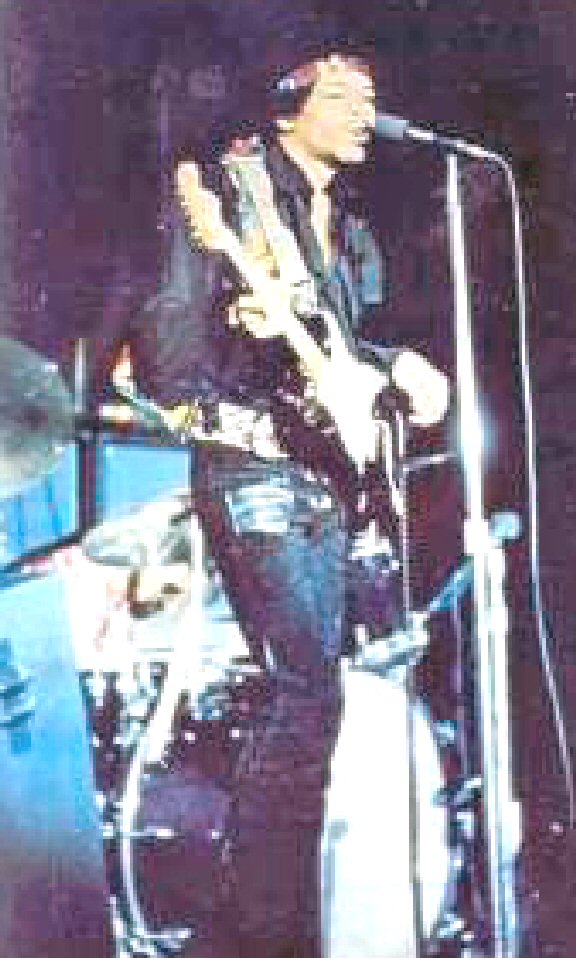 Los Angeles - April "1970"
The Lifelines CD box set contains anApril 1969 Los Angeles Forum concert withbassist Noel Redding and the originalExperience. One year later, Jimi returnedto L.A. for the first date of his Cry of Lovetour. Bassist Billy Cox replaced Redding,but Mitch stayed on drums. It is this later"unknown" L.A. gig, on the heels of thefirst Earth Day bash, that warrants scrutiny by serious Hendrix listeners. In aninterview prior to the gig, Jimi spoke ofintentions to record the early shows ofthis first tour with the Mitchell/Coxrhythm section. But excellent qualitymulti-track tapes of the L.A. 70 concerthave yet to be found. A good quality copy of the L.A. 70bootleg album sounds like the tape deckwas sitting directly in front of Jimi'samps. (There are three recordings from three different tape recorders present in the Forum that night, but the very best sound quality exists on the tape where we hear two girls giggling as Jimi introduces Billy Cox on bass, and one of the girls is clearly heard saying, "Look at him [Jimi], oh, he's beautiful!" The OTHER tapes from this show were made further back in the hall, and the sound is far more distorted.) Guitarwise, this specific L.A. '70 recording features the mostcrisp and dense Strat-blast ever to thunder from an audience-made tape. Cox'sbass is heard, but like many Hendrix bootlegs, Mitchell's drums areaudible as if from a distance, likeblasting caps in an avalanche. The Forum - April "1970" 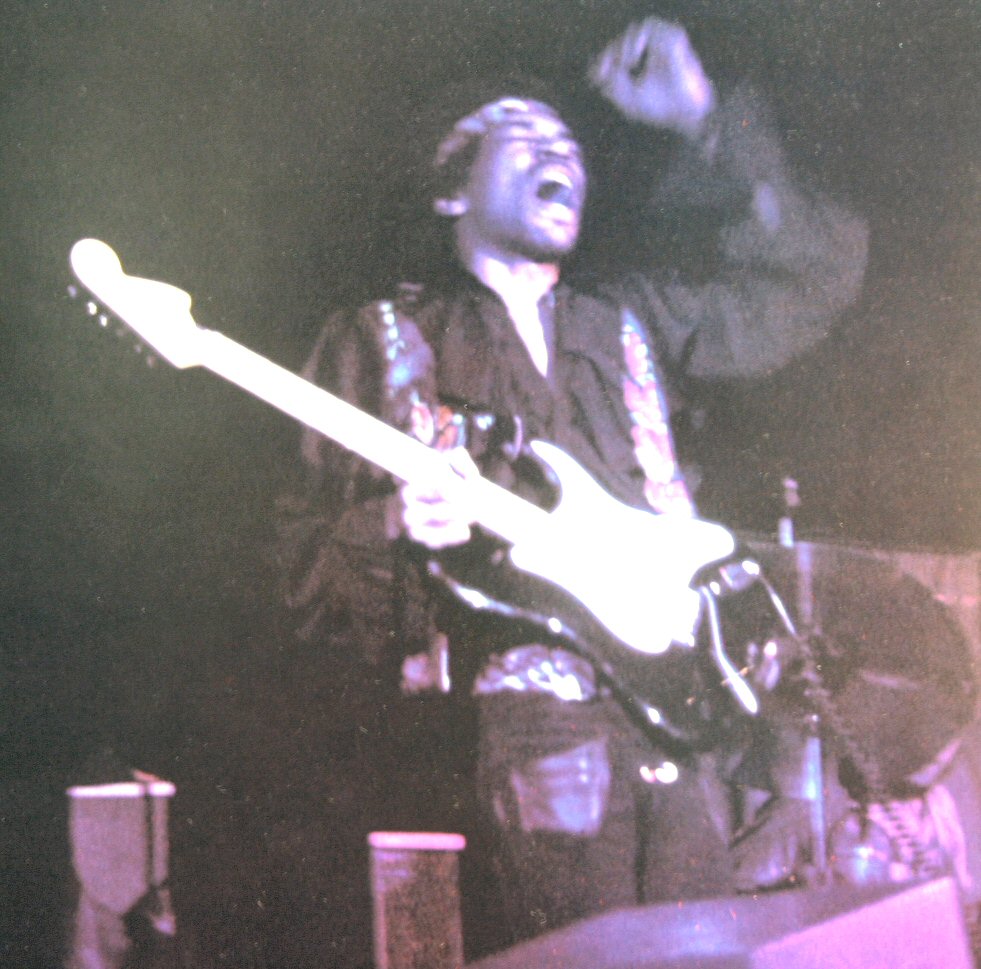 Two decades and 130 Hendrixbootlegs later, I'm convinced that the1970 L.A. Forum concert is the singlegreatest Hendrix performance I've everheard. Only the Berkeley sets rival itsimportance. The Forum was Jimi's firstgig with Mitchell in seven months, and hisfirst concert following the January 1970 disbanding of A Band of Gypsys. After athree-month hiatus, Jimi was ripe for thestage. At the L.A. debut of his new Cry Of Love band,he reached a peak of electrically-chargedconcentration. Not the slightest trace offatigue or hesitation is present. The ampssound like they were just overhauled freshoff the assembly line, and the guitar toneis immaculately crisp, full and taut. Notyet strained from weeks on the road,Jimi's singing is powerful and expressive,delivered with sage-like authority. By themiddle of the first solo this gig attainsmythic proportions. Jimi burns with solarbrilliance. Sparklers light up everysynapse in his brain. Strings snap off themaple neck Strat like tree trunks cracking inthunderclaps. L.A. '70 captures Jimi'smiraculous attack at the max. 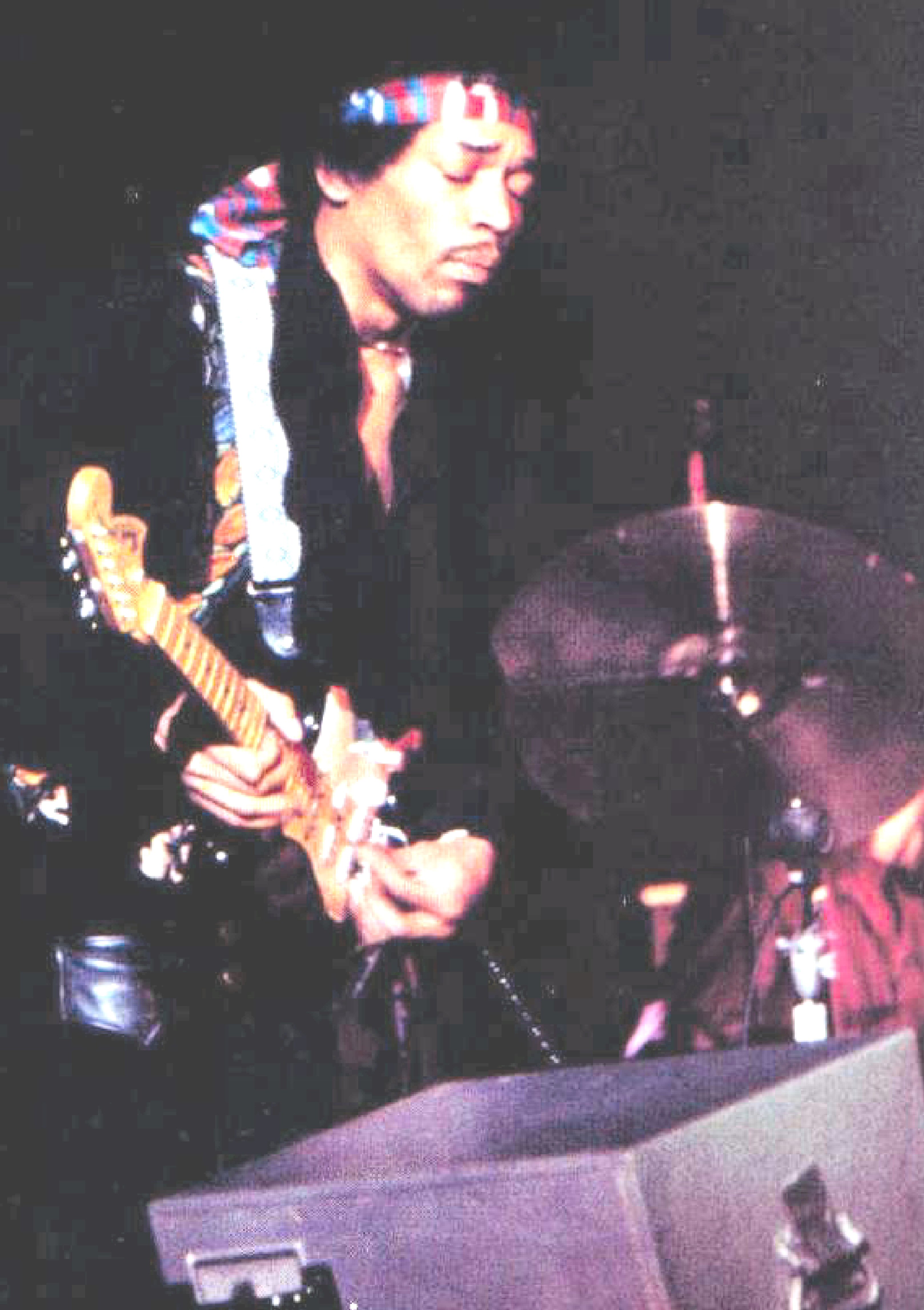 L.A. April "1970" Over to 90 stage tapes of FoxyLady are known, but the 1970 Forumversion is in a class by itself. Jimi carvesout hollow clusters with lyrically sweetDjango Reinhardt delicacy. And if youwant to hear what Lover Man is supposed to sound like in concert, L.A. '70contains the masterpiece of more thantwo-dozen versions. Jimi whips up layersof ultra-quick rock 'n' roll rhythms. HearMy Train a-Comin' is as dense as itgets. Jimi plays billiards with a series ofblack holes. Only the Berkeley version(on the 1971 Rainbow Bridge studio LP)compares with the sustained perfectionof this April '70 blues. And of 16 live EzyRyder recordings, this L.A. cut tops theheap. Chugging along in locomotivebursts, its massive blocks feel like graniteslabs slapping the earth. A sci-fi horror-blues, Machine Gun, staggers frommortal wounds and erupts. We hear themost extreme screech in the catalogueof western music. Jimi's hambone back-beats next hurl Room Full of Mirrorsthrough tangible soundwaves. It could bethe best take of an inspired studio session. Noother concert version matches it.Complicated grace notes glisten withcomputer precision. A final chord ismounted with the ceremony of a matador positioning for the kill. Jimi lets theopen A-string reverberate and pulls-off a top-string trill. Unaccompanied Baroquescales unravel and dissolve into the veryfirst and most serene performance ofHey Baby (Land of the New RisingSun). Every ornamental tone is placedwith ultra finesse. A theater-of-the-absurd Star Spangled Banner doublesas the soundtrack for Frankenstein RunsAmok. Then Jimi lets it all hang out withthe shining white knight of all liveVoodoo Child versions. Slippery-slickguitar growls anticipate fluid synthesizereffects heard years later. AUDIO: Lover Man at L.A. Forum '70 (2:53 .mp3 file 1.32 MB) - from the BEST of several recorder sources As a whole, song-for-song, the L.A.'70 bootleg documents the finest sustained musical performance I believe Jimiever gave. Full-blown inspiration frombeginning to end. Very little liveExperience music equals the sheerweight of this performance. It is the musical pinnacle among Jimi's appearancesagainst which all other Hendrix concertsshould be measured. AUDIO: Hear My Train at L.A. Forum '70 (9:45 .mp3 file 4.46 MB) - from the BEST of several recorder sources 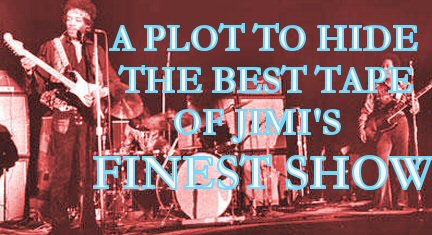 COMPARE THREE DIFFERENT TAPE DECK RECORDINGS FROM THIS 1970 L.A. FORUM SHOW: 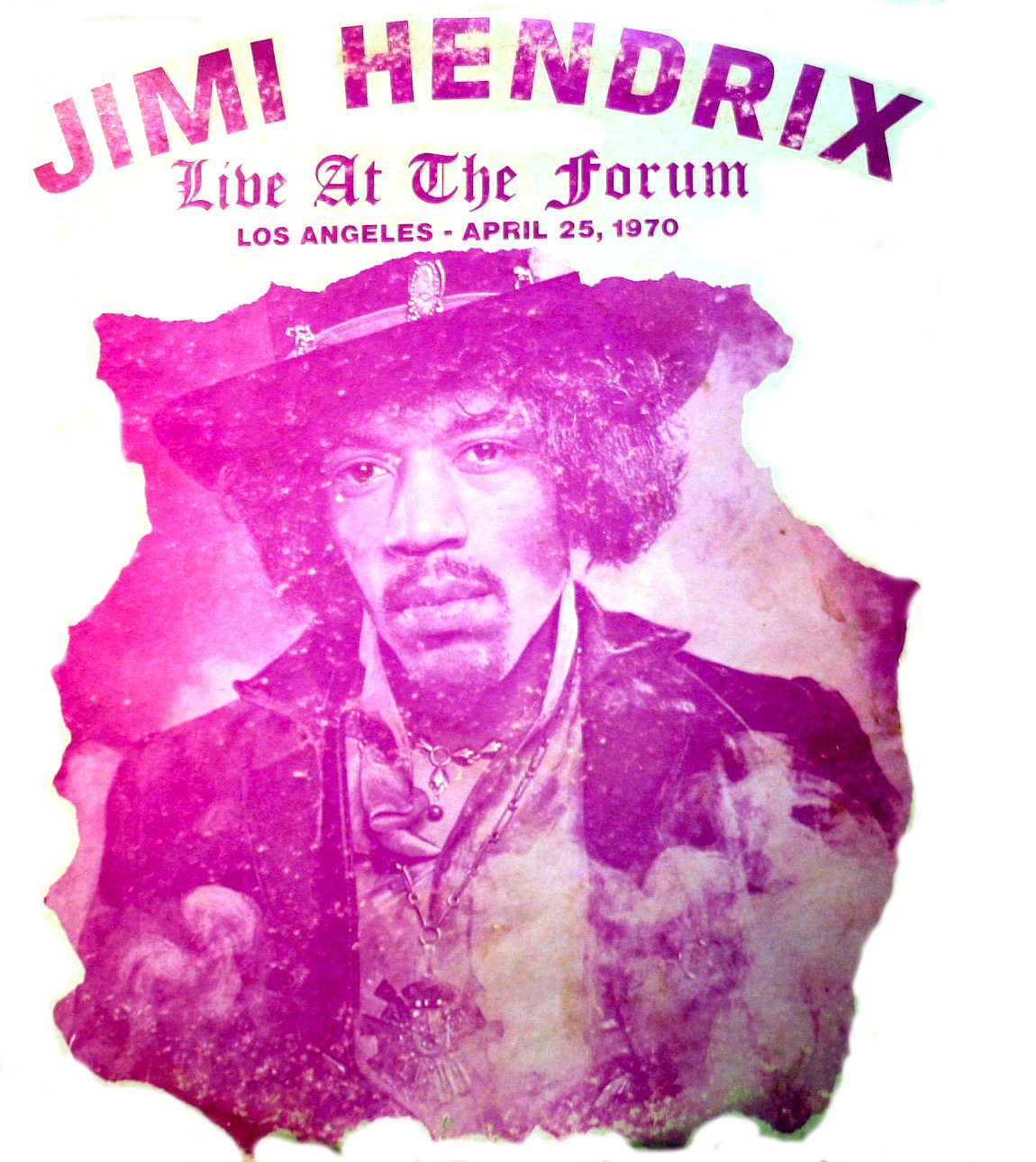 First Hendrix Bootleg Album Cover. The Music Turned Out To Be His Best Show Music Now: "How do you feel about the bootlegs circulating?"Jimi: "I haven't had many records out for a while. Those pirate tapes, you know, some cat went to a private practice session with a tiny tape recorder and made a pirate LP. The quality must be terrible. There are pirate tapes of the Woodstock thing around too."It's depressing to infer from Jimi's above quote (spoken to Norman Joplin in Jimi's London hotel room on Aug. 28, 1970, three weeks before Hendrix died) that he didn't live to hear the amazing first bootleg to circulate among his fans, from his landmark 1970 L.A. Forum performance. "Bootlegs" - unauthorized vinyl albums - were the new thing throughout 1970. The first one I recall seeing is of Bob Dylan's outtake recordings, called The Great White Wonder. In September 1969 Rolling Stone published interviews with the people who produced that album. In the summer of 1970 there were two record shops in my hometown that sold bootleg albums. I recall seeing a bootleg of The Beatles at Shea Stadium, and a Jethro Tull bootleg that summer. I still remember the day in August 1970 when I walked into one of the record shops and saw two new bootlegs: Led Zeppelin at Blueberry Hill, and Jimi Hendrix - Live at the Forum 1970. I had enough money for just one of them, and I stood there with a friend for several minutes trying to decide which one to get. We finally decided on the Hendrix bootleg. This was the album I was listening to all through September 1970, then on the 18th we heard Jimi had died. The Vinyl LP Label On Munia Records - August 1970 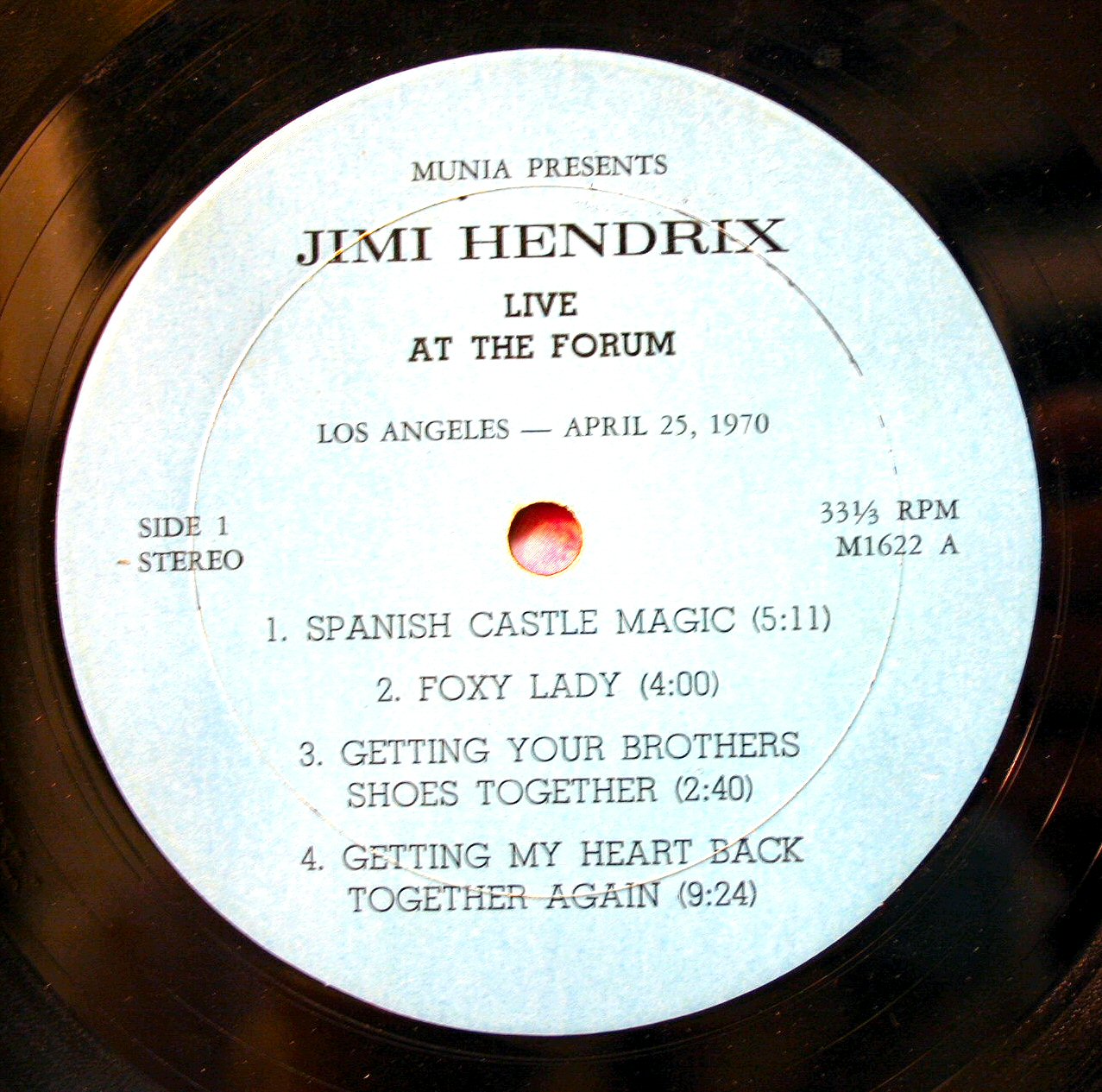 I never did see any bootleg of Jimi at Woodstock, which he mentions in his Music Now interview. In 1978 I recall reading about it, though, when the first major biography of Jimi (by David Henderson) was published. The bootlegs of Jimi that I saw after I got the L.A. Forum album were from Maui, and then the BBC radio sessions came out on a bootleg titled Live Experience (I saw a version of this same album with the title Goodbye Jimi) - these were out in 1971. I was actively looking for any bootleg album from 1970 on, especially after Jimi died, and I know for sure these were the first three Hendrix bootlegs widely circulating in northeast USA: LA Forum 1970, Maui, and BBC Sessions - I still have these three vinyl albums from four decades ago. One other thing that comes to mind about Jimi's 1970 Forum show is a conversation I once had with drummer Mitch Mitchell (who played with Jimi that night) when Mitch told me he recalled meeting Quincy Jones at the Forum show in L.A. I've seen and read many interviews with Jones over the years, including a PBS documentary of his life where he discusses influential musicians from his era, but never have I heard him mention Jimi. David Henderson reports that Jimi's girlfriend, Devon Wilson, had been involved with Quincy in L.A. at the time she met Jimi in 1967. But it seems odd to me because, if Mitch's memory is correct, and Jones did witness Jimi's LA Forum music, one would think that a musician of Jones' caliber would recognize the supernatural state of Jimi's performance that night. But then again, as the Jim Bickhart review below shows, the music itself often went right over the heads of those who came to see a "Wild Man" set fire to his smashed guitar: "Hendrix, a second-stage demigod of the Cream Generation, did not have the [L.A. Forum] audience wrapped constantly around his little finger pick. The Hendrix Experience...is an unbalanced power trio with Jimi a top-heavy leader...[with] huge musical gaps left by Hendrix's noisy, undisciplined guitar style...[played] material from the group's old albums, it was these songs which made this concert deadly dull. Jimi's attempts to update too-familiar guitar solos became pure cacophony, and Billy Cox was half asleep as he played bass runs first created by Noel Redding...with Hendrix apparently trying to inject some music into his 'music.' [New songs] featured guitar breaks that bordered on being tasteful. The audience seemed bored by them, though." 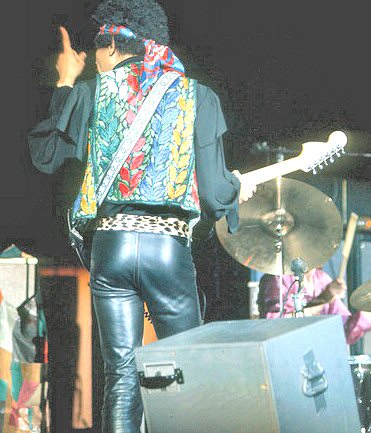 L.A. Forum A bizarre phenomenon runs all through the concert reviews of Jimi's shows, a fantastic double standard that is seen for no other major musical artist. His first album was released in Europe in May 1967, and in the U.S in late August 1967. In February 1968 he returned to the U.S. for his first proper headlining tour (the handful of Jimi's shows in the States in the summer of 1967 occurred prior to his album release in America. He was not a major draw until his first album, Are You Experienced?, became a staple among the young during the fall of 1967). Point is: his "concert years" in the U.S. were mainly two and a half years - from winter/spring 1968 through summer 1970. Yet we see repeated pot-shots from many reviewers in 1970 complaining about him playing "old" songs in 1970 from his first album! We're talking about songs we'd heard for just two and a half years. To fathom how insane this is, compare it with any other major rock band: WE HAVE HAD FOUR AND A HALF DECADES OF THE ROLLING STONES PLAYING SATISFACTION AND STILL NO COMPLAINTS! Ditto the Moody Blues with Nights In White Satin, etc., How 'bout THIRTY FIVE YEARS of Springsteen singing Born To Run? HOW 'BOUT A HALF CENTURY OF DYLAN SINGING BLOWING IN THE WIND?!! YOU MEASLY LITTLE SLITS! What were you bumming Jimi out for? with your jealous damn panning his shows? These rats just figured Jimi was "gittin rich" and they lined up to bum him out. But he had very little money, his income was mostly ripped off by management or tied up in endless lawsuits against him. 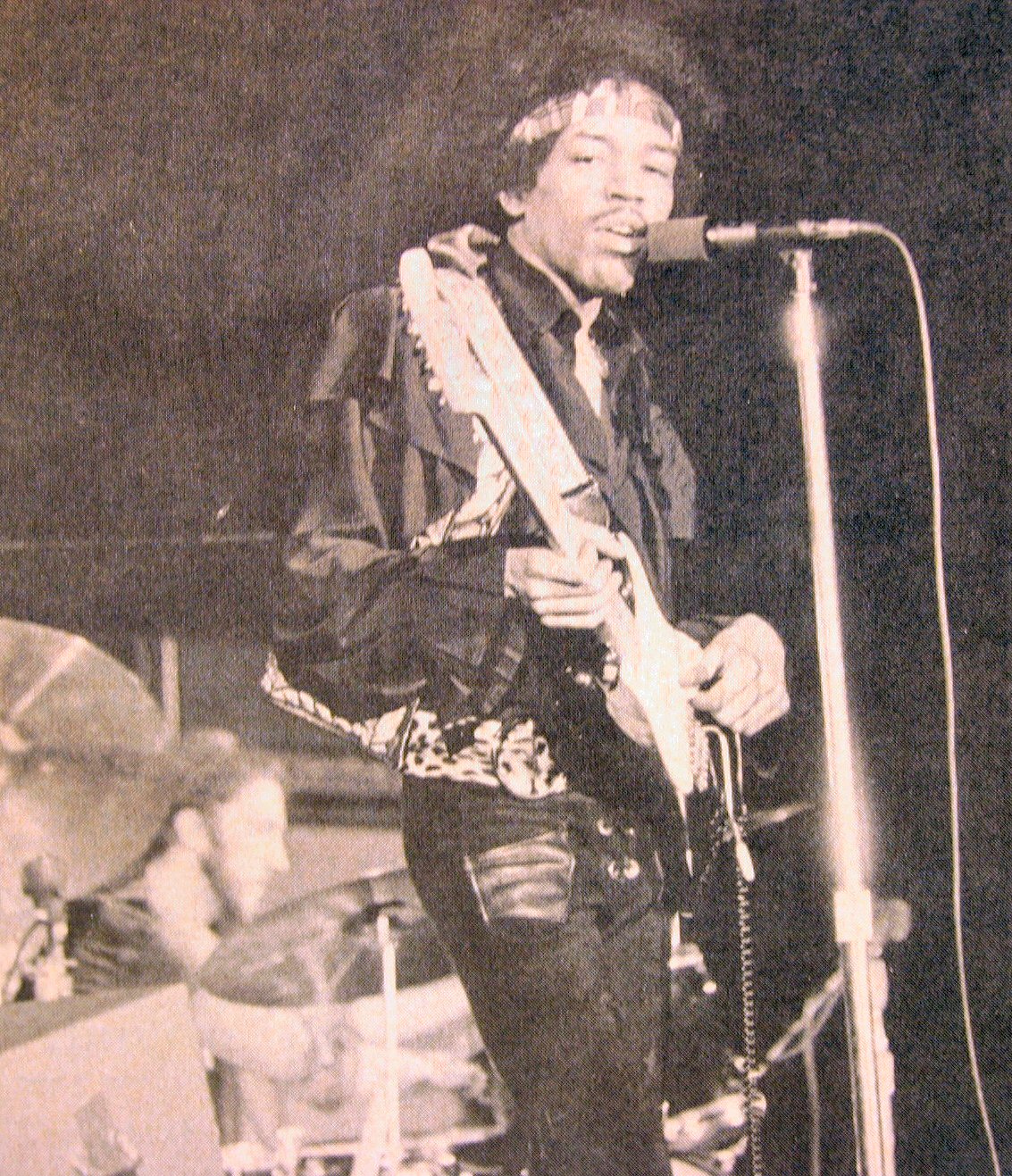 Forum - April "1970" The Experience was NEVER ON AMERICAN TV - AT ALL - even though they were the highest paid band on the concert circuit. Except for the people who happened to attend one of his shows, Jimi's audience during his lifetime never heard live Hendrix music until the spring of 1970 when the Woodstock movie and album came out, along with Jimi's live Band Of Gypsys album. It's just insane to read through his concert reviews and see this attitude dismissing him for playing songs that were introduced to his fans just TWO AND A HALF YEARS prior - while all these other bands get to play their hits for decades on end and no one pans them like they did to Jimi. It's just more evidence that this civilization WASN'T THEN AND STILL ISN'T ready to comprehend Hendrix - with the attendant tragedy that he was imparting what was required to avoid asteroid extinction. And now today we see these same rats hanging out their ass to censor and suppress Rock Prophecy.  MORAL OF THE STORY: Without question, this civilization has brought on its own extinction. Their pathetic acquiescence acceptance attitude - "Oh well, we all gotta die sometime" - doesn't wash with the kids you've robbed of a future - and these youth need to be informed of how to get at you to ADMINISTER FAIR(CHILD)NESS into your unfair violence-provoking terrorism and defend themselves immediately by any conceivable means... Many years after Jimi died, two different recordings of the same 1970 L.A. Forum concert were found from tape decks in the hall that night, decks located further away from the stage than the deck that recorded the vinyl bootleg album. These later two tapes have lesser sound reproduction, most of the music's nuances heard on the "1970 tape" are lost on these tapes found years later. Yet, these worse quality tapes are widely circulated by collectors (one of these trashy versions has been featured for years on the Hendrix company website). The better sounding "1970 tape" remains almost totally unknown today. Collectors did this intentionally in the 1990s after they saw I'd published three articles about Jimi's 1970 L.A. Forum show: in 1990, in 1992 (the current Guitar magazine article you're reading), and again in 1994 (in Straight Ahead magazine). In order to discredit my claims about this 1970 L.A. Forum show being Jimi's best, collectors aimed to make the best-sounding tape of it inaccesible, they buried the best sounding tape beneath an avalanche of bootleg CDs of the bad-sounding tapes from L.A. 1970, and littered Youtube with tons of bad sounding uploads from it. Today, most people who know about this concert have heard only one of the bad-sounding tapes, so when they read my description about the show, they can't fathom what I describe - that's what the collectors intended when they flooded the bootleg CD market with bad-sounding copies of this show, they aimed to remove evidence that what I said is correct (and they continue to do this for everything I point out, with Paul Allen's media empire spreading their lies worldwide). These same detractors did a similar thing after two of my published articles pointed out the best of Jimi's shows with his Band Of Gypsys group. 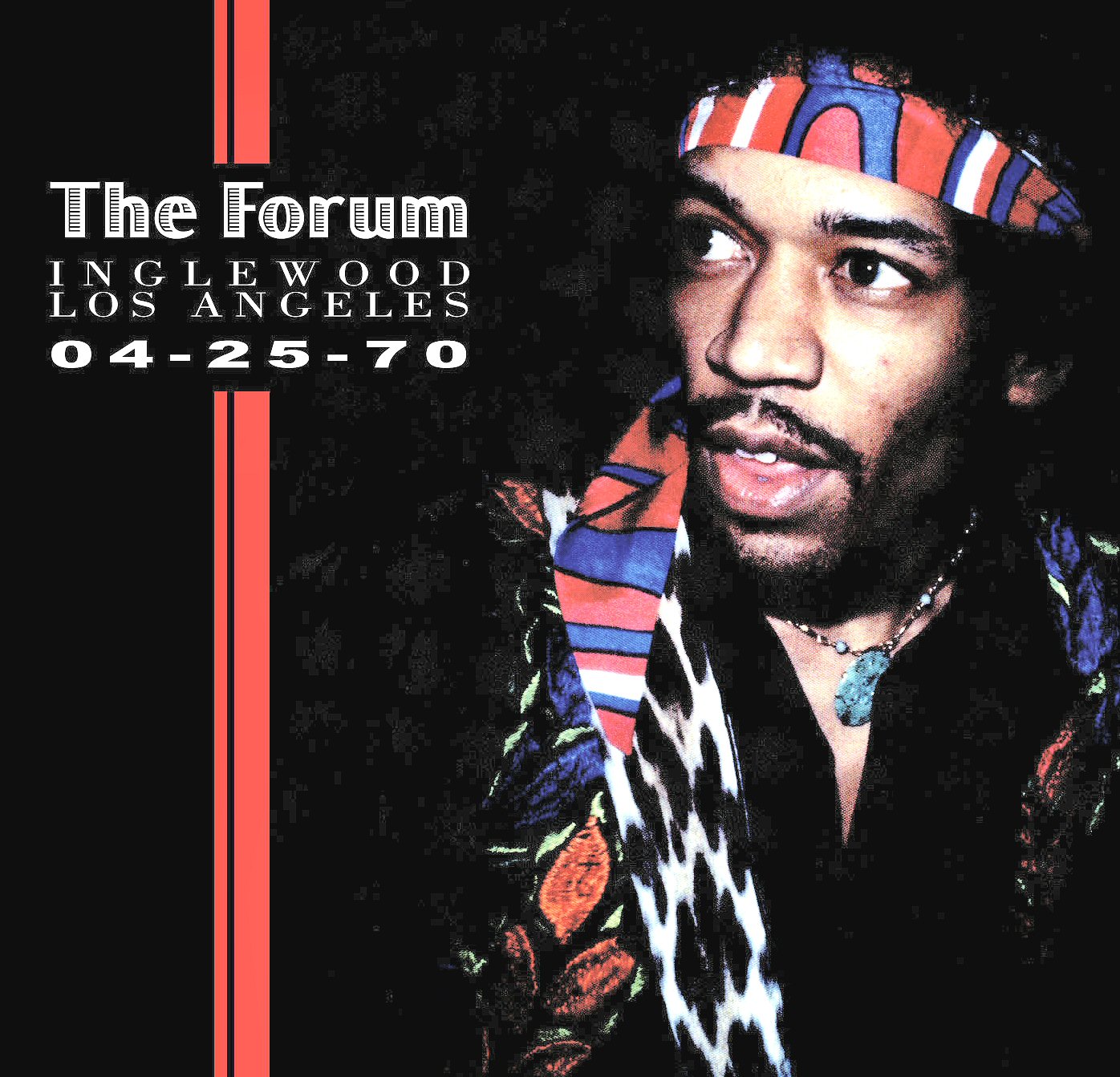 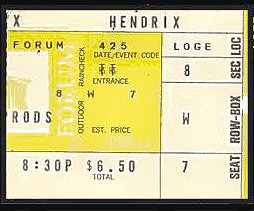 Show Ticket So below I've lined up the three different tape sources from the 1970 L.A. Forum concert for comparison. The first comparision is of the concert introduction. From this segment comparisions we get familiar with how each recorder captures the ambience of the hall.The "1970 tape" (Source 1), which is best, is the source for the first Hendrix bootleg album in 1970, and it's identifiable by the presence of two girls nearby the tape recorder who are heard speaking during the concert intro (the girls are heard at points throughout the show). The other, later-found, tapes have different audience members around those tape recorders, however, the tape found in the '80s, the "1980s tape" (Source 2), is positioned in a spot nearby the "1970 tape" recorder; if you listen closely to the Source 2 excerpt link below, you can hear the two girls, who're sitting next to the "1970 tape" recorder, their voices are also heard (more faintly) on the "1980s tape" - listen at the spot just one second before Jimi says, "We have Billy Cox on bass" - and we hear a girl say "Look at him, oh he's beautiful." On the "1970 tape" her voice is clearly heard upfront, whereas on the "1980s tape" we hear this same girl from some distance, maybe two rows away, which suggests that the Source 2 "1980s tape" was made on a comparably cheaper model tape recorder than the better sounding Source 1 "1970 tape" deck located nearby it in the Forum. The differences are not minimal, because there are many, many musical passages from Jimi at this show where the timbres of sound he produced are clearly heard on the Source 1 "1970 tape" but are lost or sound muffled on the Source 2 "1980s tape" and Source 3 "1990s tape." On the link below - "Concert Intro from the 1970 (best) tape" - listen to hear one of the girls say at point 0:31 "Look at him, oh he's beautiful"... L.A. FORUM 1970 SHOW INTRO FROM 3 DIFFERENT TAPE DECKS: AUDIO: Concert Intro from the Source 1 "1970 (best) tape" at L.A. Forum '70 - from the BEST of three recorder sources - (1:07 .mp3 file 2.04 MB) At 0:31 Hear the Girl Say "Look at him, oh he's beautiful." The link below plays the Source 2 tape that circulated among collectors during the 1980s. This tape was made by a cheaper recorder further away from the stage than the deck that recorded the Source 1 "1970 tape", and the sound is far more distorted: AUDIO: Concert Intro from the Source 2 "1980s tape" at L.A. Forum '70 - more distorted sound than the "1970 tape" - (2:06 .mp3 file 3.86 MB) The Source 3 recording was circulated in the 1990s. This tape was made by a recorder much further away from the stage than either the Source 1 and Source 2 tapes and the sound is far more distorted: AUDIO: Concert Intro from the Source 3 "1990s tape" at L.A. Forum '70 - recorded further away from the stage than the "1970 tape" - (2:14 .mp3 file 4.11 MB) 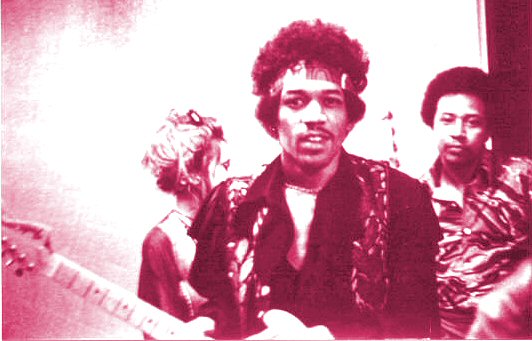 L.A. Backstage 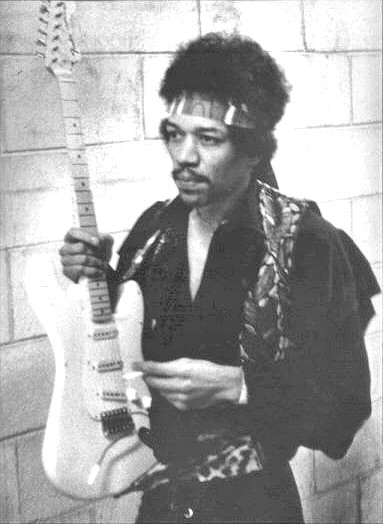 When the Hendrix collectors read in my published articles that I'd included a way to tell the tapes apart by the intro, they actually went to the lengths of excerpting the intro section with the girls voices, lifting that bit of the recording out, and inserting it at the beginning of the other, bad-sounding, tapes, which confused anyone who tried to find the best sounding copy of this show; you'd hear the girl's voice, as I described, but the rest of the show sounds distorted and muffled, because collectors had spliced the intro section onto the bad-sounding tape. Fortunately, there's a fool-proof way to identify the best-sounding tape. Again, it's by listening for the girls' voices, as we hear them giggling and moaning in response to the music, during Spanish Castle Magic at points 0:17 - 0:20 and 2:05 - if we hear the girls, we know that the tape recorder they're near captured the best sound quality for this show. 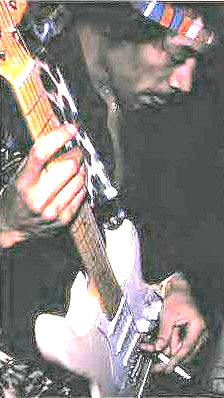 And now, with the internet, we can line up the three different recordings and compare what the differences are in sound quality. After getting familiar with the amazing delicacy heard from Jimi on the best-sounding Source 1 "1970 tape" - when we later go back to the heavily circulated bad-sounding tape sources, we can recognize just how much of the pleasure of hearing this music is lost on the tape versions that collectors flooded the market with, in an attempt to point at me and say - "See, his claims make no sense!" 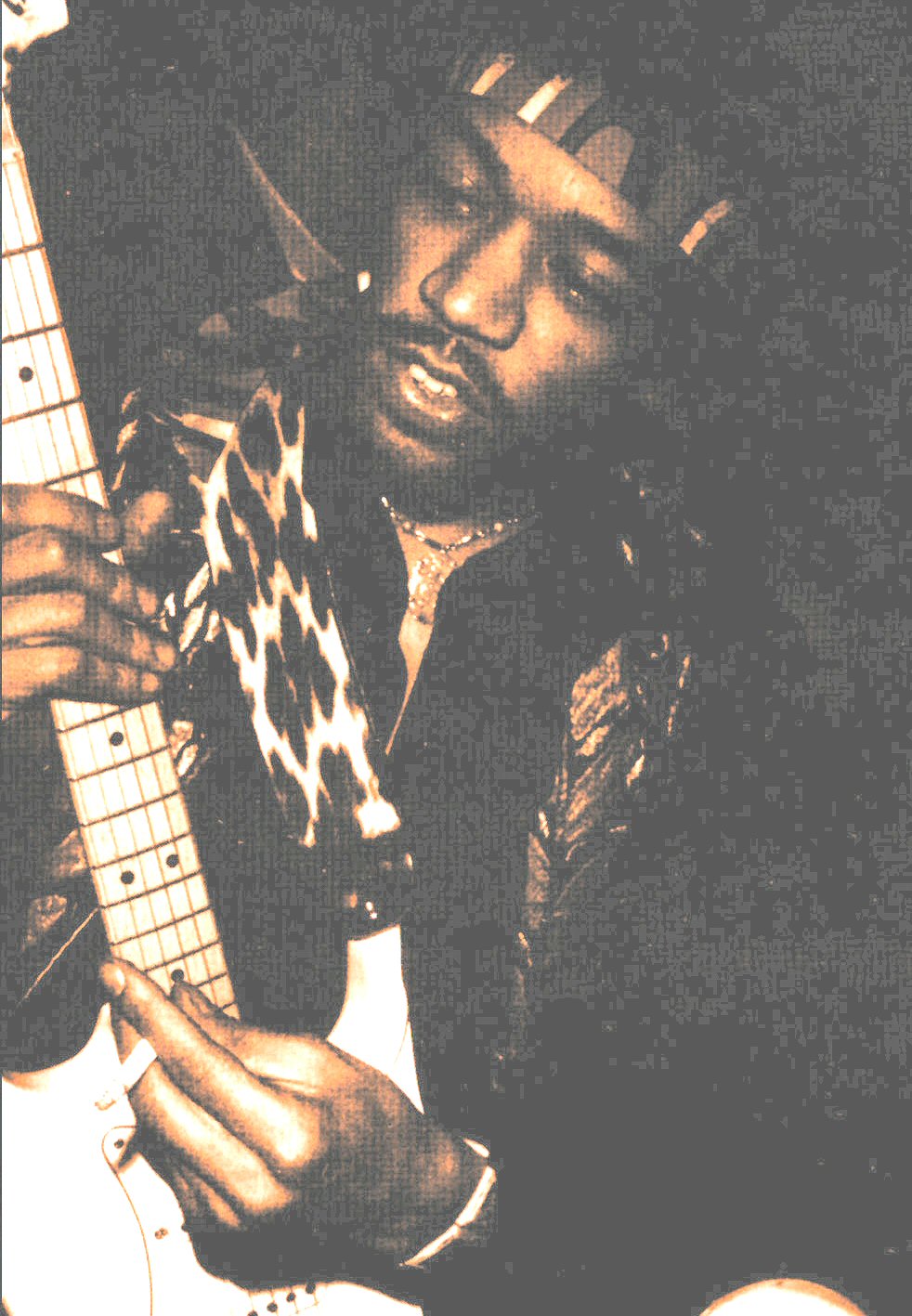 The psychological process by which these people are driven to rejoice in attempts to discredit, ridicule and humiliate is a worthwhile study that reveals the most important "signposts" of human interactions, how those with the most insight are routinely concealed to history and beaten into oblivion by the lower-brow herd that's driven to brutalize us out of their own pathological envy - they just regard us as having more potential for influence than themselves and make it their life's ambition to receive news of our deaths. * * * Below are five exerpts of the same (approximately) 47-second segment of Foxy Lady from five different "bootleg" CD releases of this show. The bass/treble settings vary from one CD release to another, so this Foxy Lady segment is useful to highlight the differences between versions because it contains, from Jimi's guitar, sound timbres that we hear on the best of the tape versions, and then hear how this tonal aspect is lost on the lesser quality tape sources that follow. If you have acquired a copy of this Hendrix recording in the past, you can determine from the samples below which version of this concert you have on CD, digital download, or cassette.AUDIO: Foxy Lady Source 1 - "1970 tape" mix A (0:49 .mp3 file 1.49 MB) This is a direct transfer from the 1970 vinyl album and the best sound reproduction. Listen specifically at point 0:24 - 0:27 to the tone manipulation Jimi does with his guitar phrase. Isolate this same phrase in subsequent tape sources below to hear how much of the sound is lost on those tapes. All of the songs from this show have similar segments of beautiful tone manipulations from Jimi that are not captured by the other recorders. After you become familiar with the best sound source for this music, it's not even worth it to bother listening to the lesser sources, the magic heard on the Source 1 "1970 tape" is gone from the other tapes, as is heard on the links for them below: AUDIO: Foxy Lady Source 1 - "1970 tape" mix B (0:46 .mp3 file 1.43 MB) This is also a transfer from the 1970 vinyl album, but the mix has been enhanced. To me it has too much treble sound. AUDIO: Foxy Lady Source 2 "1980s tape" mix A (0:47 .mp3 file 1.44 MB) This is from a second tape deck in the hall, there's much more echo and distortion of sound. AUDIO: Foxy Lady Source 2 "1980s tape" mix B (0:47 .mp3 file 1.43 MB) This too is from the same second tape deck, but the sound has been enhanced to improve tone. It's better than the unenhanced "mix A" link above, but not as good as the Source 1 "1970 tape." AUDIO: Foxy Lady Source 3 "1990s tape" ( 0:46 .mp3 file 1.42 MB) This is the third tape source from the show, the tape was located in the 1990s, it has the worst, most distorted sound. 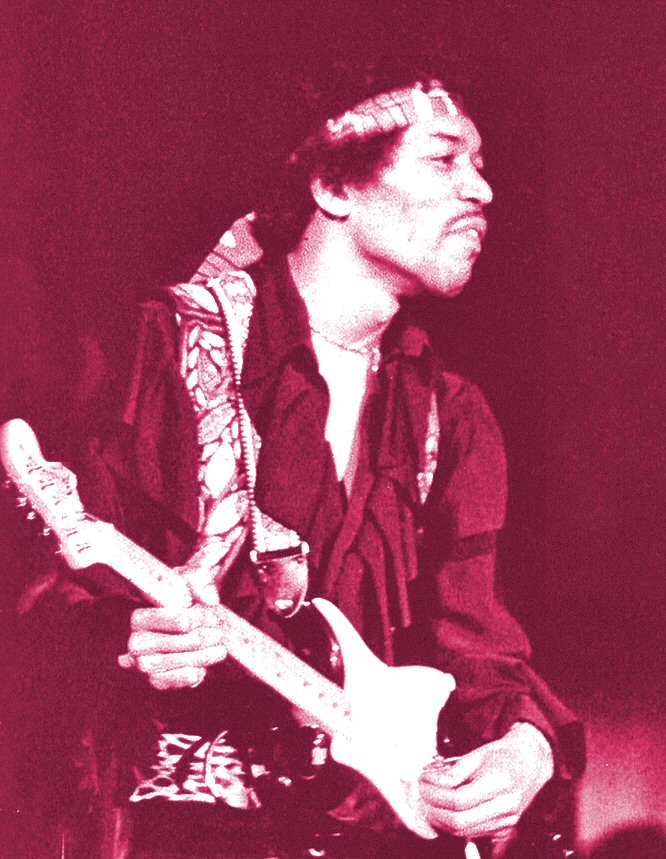 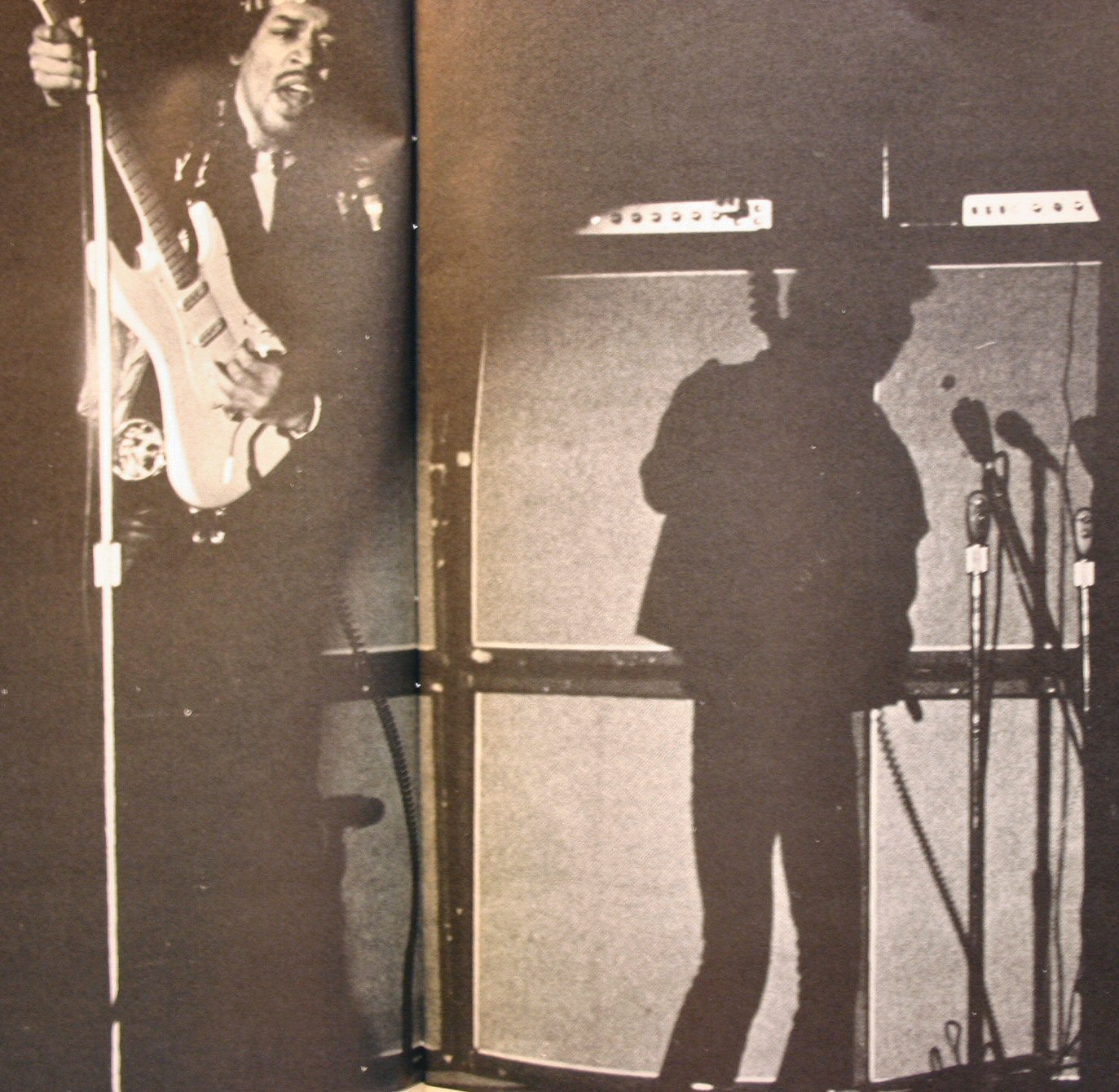 L.A. Forum A footnote to this last version, Source 3 "1990s tape" - a section of this "bad" recording was used in the Hendrix documentary "The Man They Made God" produced in the year "2000." This documentary is the worst of all the Hendrix video documentaries, the editors really had an agenda to trash Jimi's legacy and portray him as a completely unappealing personality, a real dominator smear job made by guys obviously threatened by Hendrix. So it's fitting that when it came to including Jimi's version of the Star Spangled Banner they used this raunchy distortion mess heard on the Source 3 "1990s tape" from the 1970 L.A. Forum show. It's also noteworthy how the pigs who were given my job at the Hendrix company went out of their way to include on their website the bad-sounding version of this concert. Like the "collector detractor syndrome" I describe above, they promote the bad-sounding recording source specifically to hide evidence of the case I've made in this article. To those freaks at the Hendrix company, it's actually more important that listeners conclude I make no sense than it is to promote what really is Jimi's single greatest live concert. They don't want anyone to know I'm right, so they intentionally circulate horrible recordings of this L.A. Forum show. The reality is that the "anti-Jimi" - funded by Paul Allen, today controls and destroys the Hendrix legacy, re-mixing all of Jimi's "official releases" with subliminal tracks of irritating noise that repels new generations from being able to respond to true Hendrix music. It is Top Priority to the evil elite dominator class, frantically racing to make their escape, that the vision of Jimi remain absolutely censored and suppressed right up to the point of the coming asteroid impact (which they're responsible for us being unprepared for). Much more later on about how psychotic those rabid rats of Seattle really are... For now, below are three complete Hendrix songs for comparison from the 1970 L.A. Forum concert: Spanish Castle Magic (show opener), Hey Baby (Land of the New Rising Sun), and Villanova Junction. The sound dynamics in these three songs allows distinctions to be heard between the three different tape recorder sources: L.A. FORUM 1970 SPANISH CASTLE MAGIC FROM 3 DIFFERENT TAPE DECKS: AUDIO: Spanish Castle Magic at L.A. Forum '70 - from the 1970 BEST of three recorder sources - (4:17 .mp3 file 7.84 MB) listen for the two girls giggling at 0:17 - 0:20 and at 2:05, it's how to identify this tape AUDIO: Spanish Castle Magic at L.A. Forum '70 - from the Source 2 "1980s tape" - (4:19 .mp3 file 7.91 MB) AUDIO: Spanish Castle Magic at L.A. Forum '70 - from the Source 3 "1990s tape" - (4:16 .mp3 file 7.83 MB) . L.A. FORUM 1970 NEW RISING SUN/VILLANOVA JUNCTION FROM 3 DIFFERENT TAPE DECKS: AUDIO: New Rising Sun/Villanova Junction at L.A. Forum '70 - from the 1970 BEST of three recorder sources - (4:59 .mp3 file 9.15 MB) AUDIO: New Rising Sun/Villanova Junction at L.A. Forum '70 - from the Source 2 "1980s tape" - (4:53 .mp3 file 8.95 MB) AUDIO: New Rising Sun/Villanova Junction at L.A. Forum '70 - from the Source 3 "1990s tape" - (4:50 .mp3 file 8.86 MB) . MORE HIGHLIGHTS FROM THE 1970 L.A. FORUM SHOW - BEST TAPE SOURCE: AUDIO: Voodoo Child at L.A. Forum '70 (8:46 .mp3 file 16 MB) - from the BEST of three recorder sources AUDIO: Ezy Ryder at L.A. Forum '70 (2:50 .mp3 file 5.18 MB) - from the BEST of three recorder sources AUDIO: Room Full Of Mirrors at L.A. Forum '70 (3:32 .mp3 file 6.48 MB) - from the BEST of three recorder sources AUDIO: Foxy Lady at L.A. Forum '70 (4:14 .mp3 file 7.76 MB) - from the BEST of three recorder sources Elbow Swipe During Foxy Lady Heard at 3:01 on .mp3 Link Above 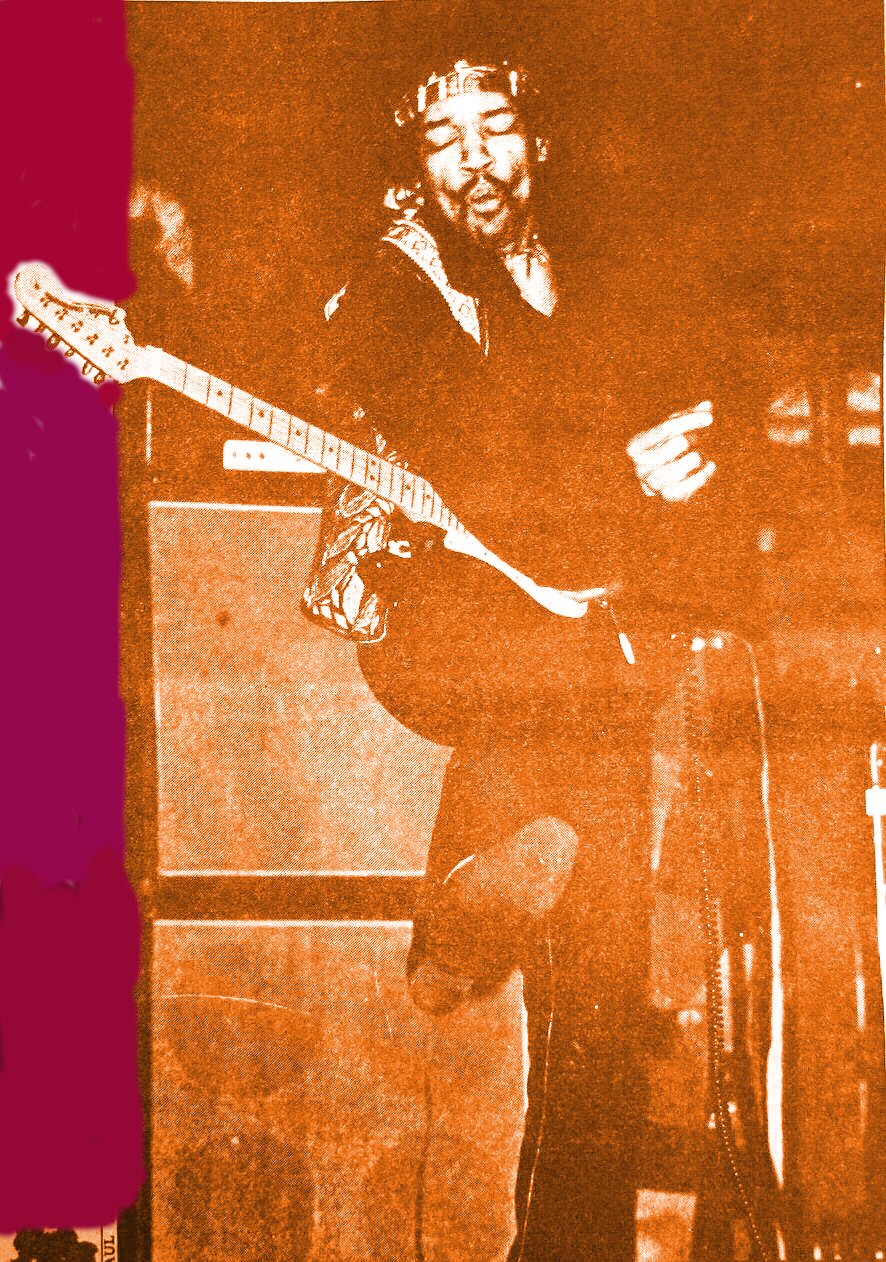 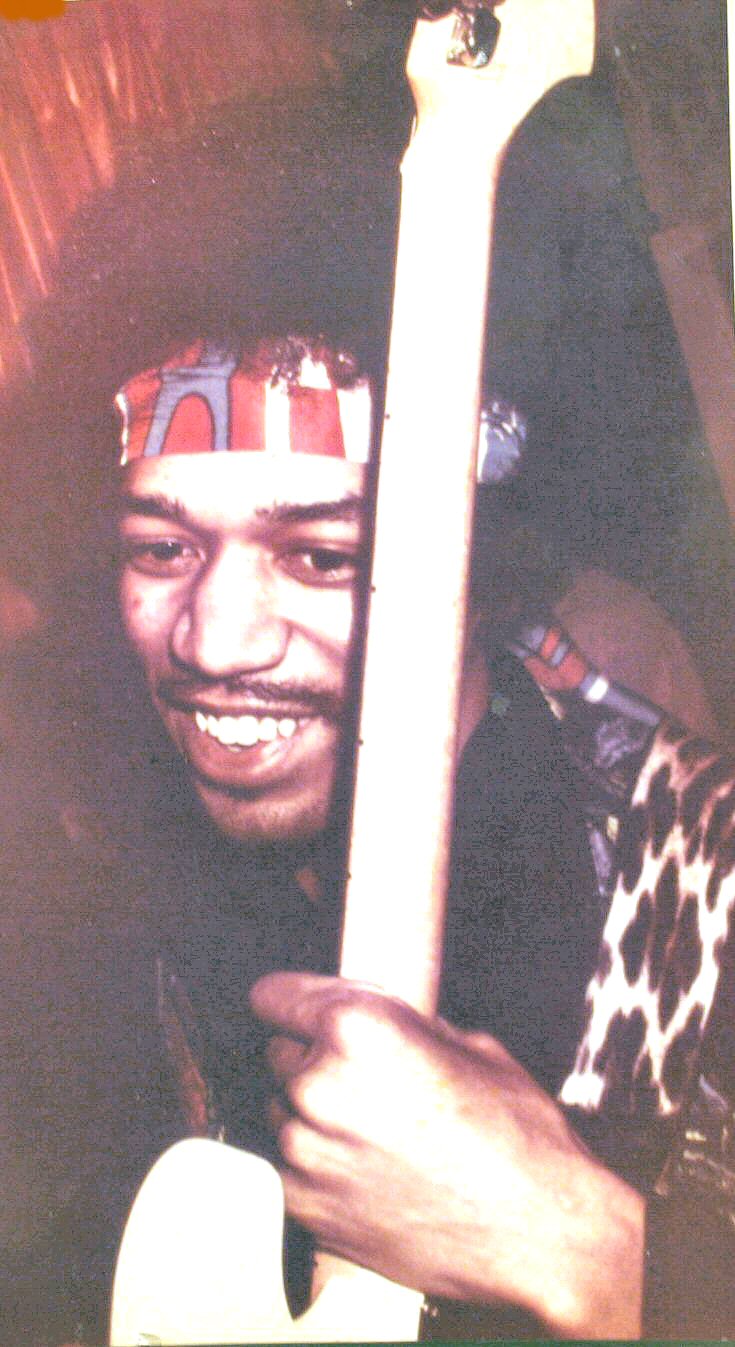 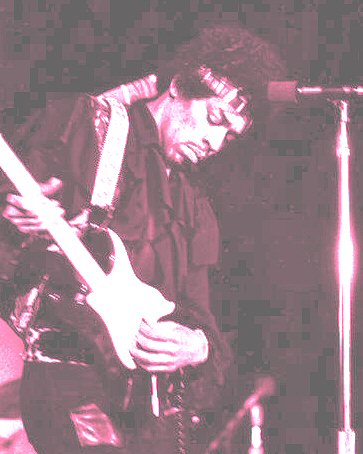 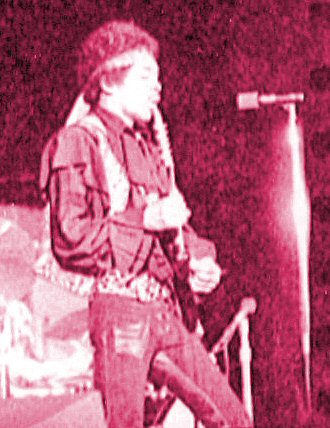 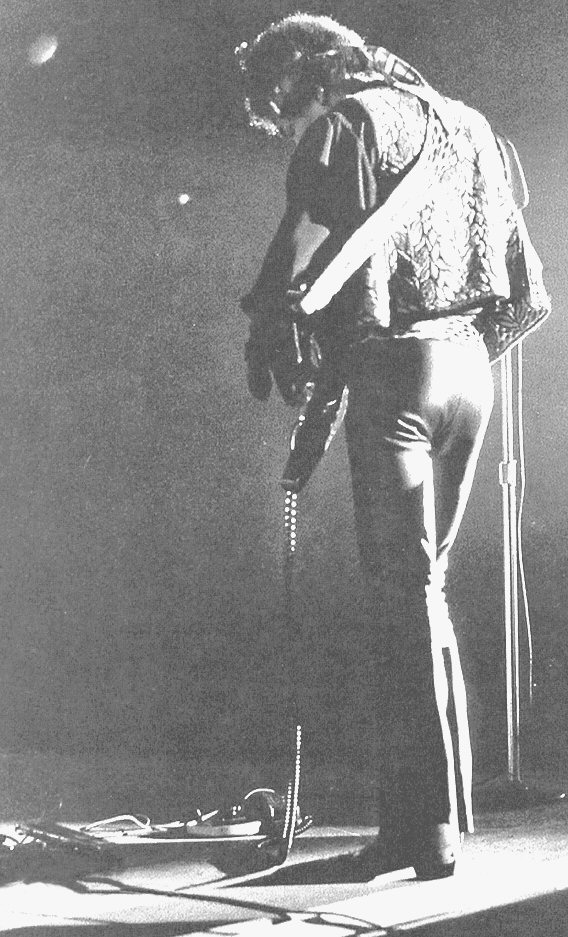 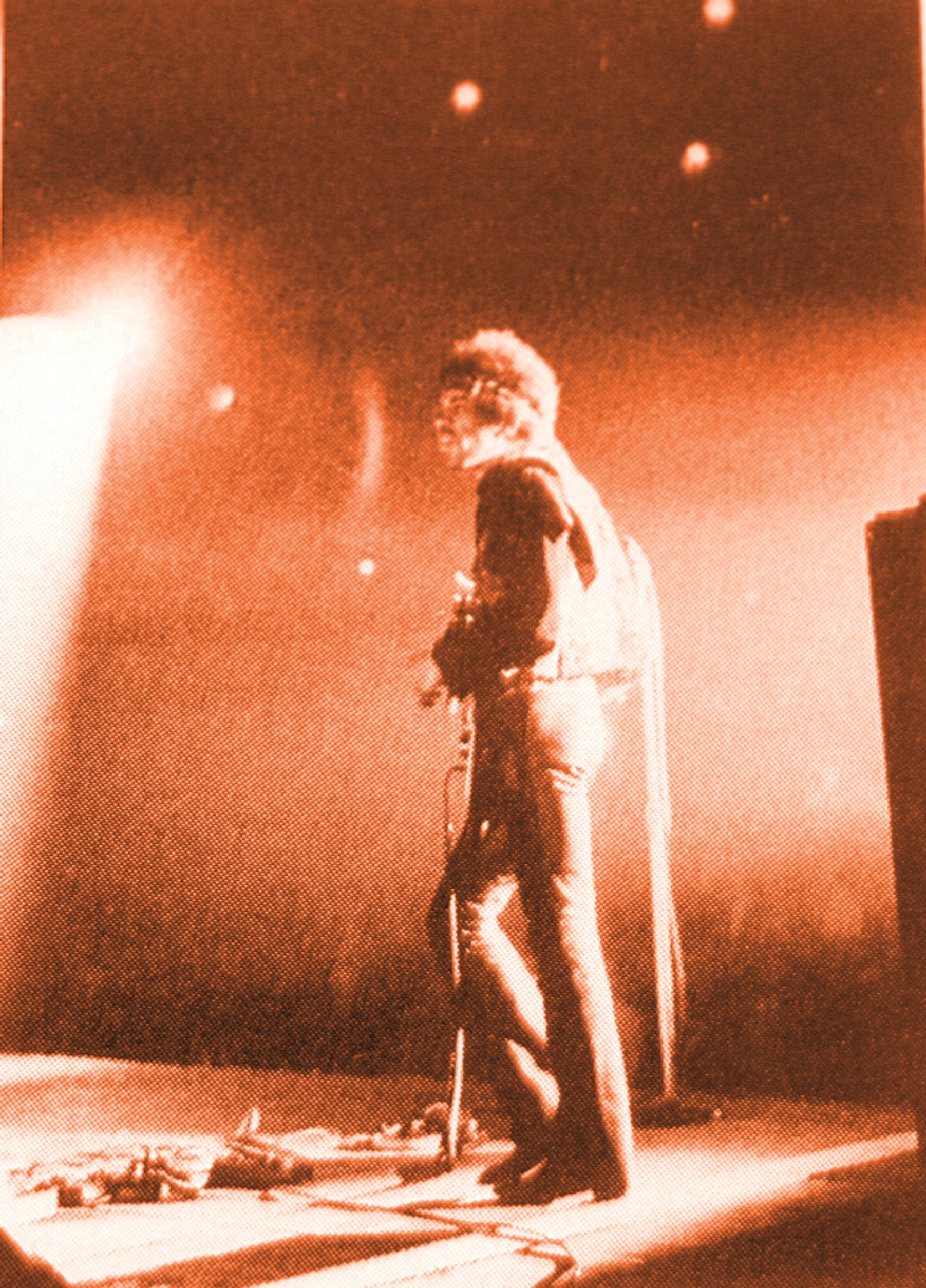 L.A. Forum 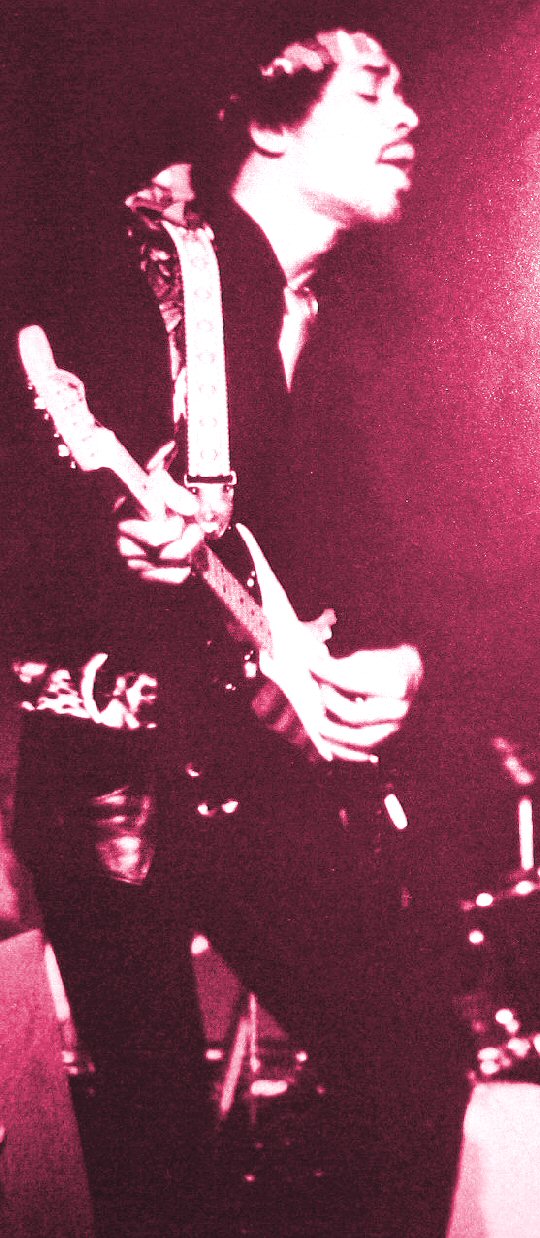 Jimi Hendrix showed a near capacity audience Saturday night at the Forum that he has lost none of his box office appeal and raw excitement...Hendrix drew an enormous opening response from the audience as he went through such early hits as Foxy Lady...he generates a charge of electricity that virtually ignites the huge arena. Hendrix is a powerhouse of sex and sound...reaching new levels of communication and emotion, levels far beyond that which most guitarists and vocalists once felt were possible. On Saturday, he seemed freer of gimmicks, more serious of purpose...his bombing raid version of the Star Spangled Banner and Purple Haze brought the audience to its feet for an ovation that lasted several minutes. Robert Hilburn - Los Angeles Times, April 27, 1970 At the huge Forum last Saturday, about 20,000 people crammed in to see Jimi Hendrix in his first appearance here in almost a year...He was relaxed, cool as ever, and did an almost casual set. He teased us with a few erotic movements during Foxy Lady, but after that he just stood there and played that guitar...I was in the second row, directly in front of him...Jimi went right into Purple Haze and all hell broke lose. It was as if the song were the pre-arrangeed signal. The aisles spilled forward, and in less than one minute the entire area was solid humanity - waving, shouting people, some sitting on their friend's necks, some perched precariously on the backs of seats...As Purple Haze ended and the closiing number, Voodoo Child, began, there was an incomprehensible (and terrifying) backward thrust. Everyone up front was somehow invisibly thrown back with sledge-hammer force. Chairs went over, people went down. Like a fool, I'd been standing on my chair trying to see Jimi through the crowd, so I went over the back of the chair and stayed there, suspended like a trapeze artist. I like Jimi Hendrix; I think he's one of the very few real innovators and a most incredible performer. But it'll be an icy day in hell before I'll see him at the Forum again. I'm afraid of his audience. Judy Sims - Disc, May 5, 1970 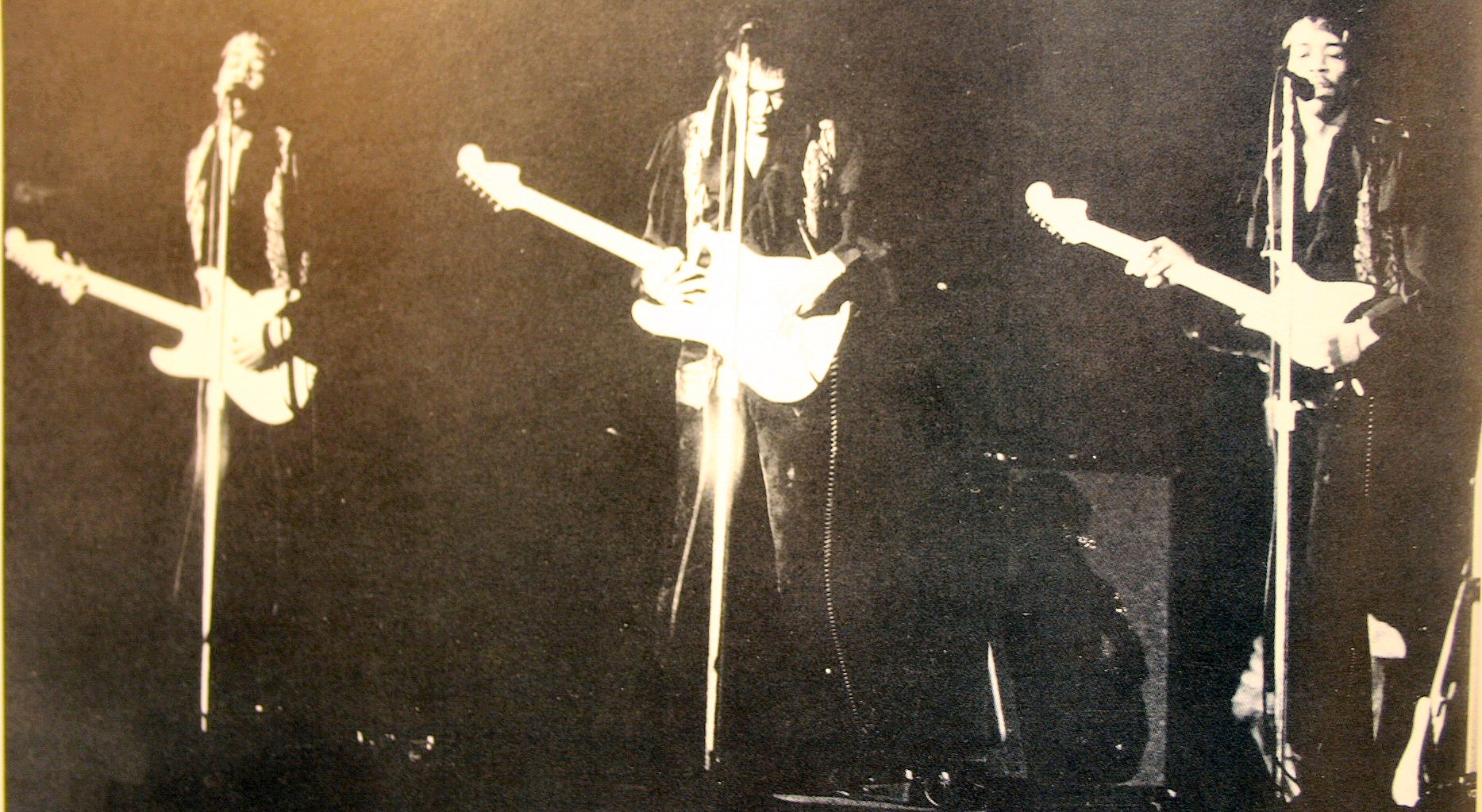 L.A. Forum - April 25, "1970" 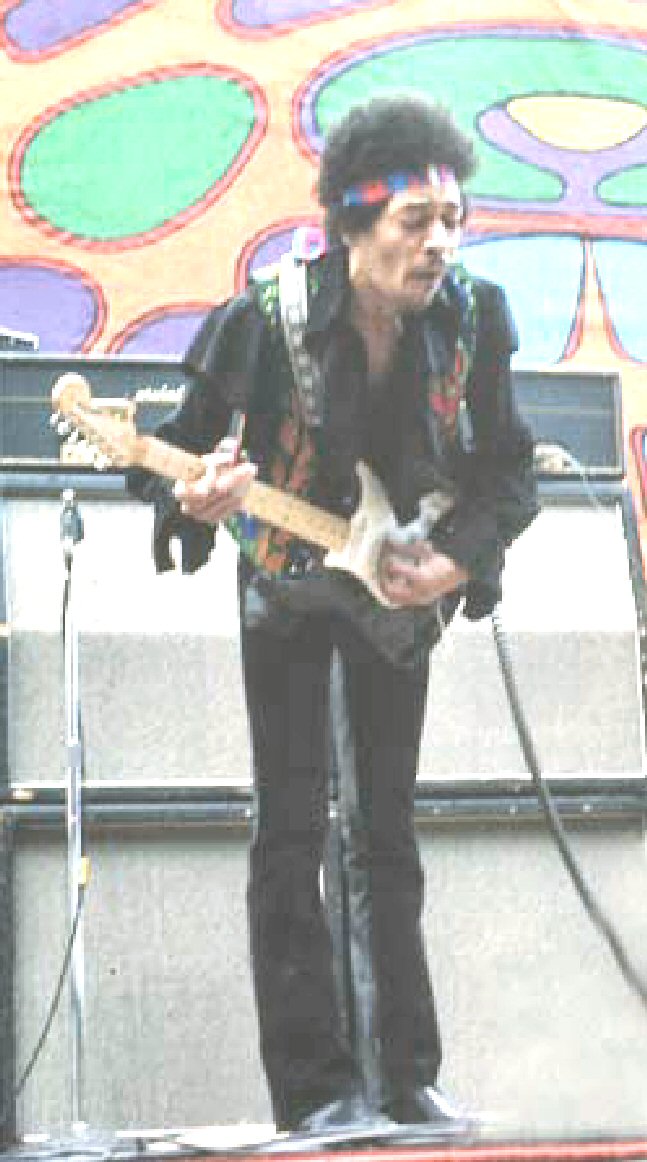 Sacramento - April 26, "1970" The 1970 tour resumed the followingafternoon at the Sacramento ExpoFairgrounds. An audience recording ofthis set confirms that the band wasgreased to the hilt after the previousnight's L.A. gig. Jimi's fingers meldseamlessly with his strings, gnawing ongurgling buzz-saw feedback. This is notthe same music of earlier tours. Deliriousmelodies are squeezed from the circuitryand snake into erotic pockets. Eerierhythms transport the crowd throughdreamy enclaves of spaced-out lullabiesto where no Hendrix audience has gonebefore. Optimally responsive amps spewfantastically charged tones. The entiresound system is manipulated in mysterious ways. By the second number, themusic has been going on forever. 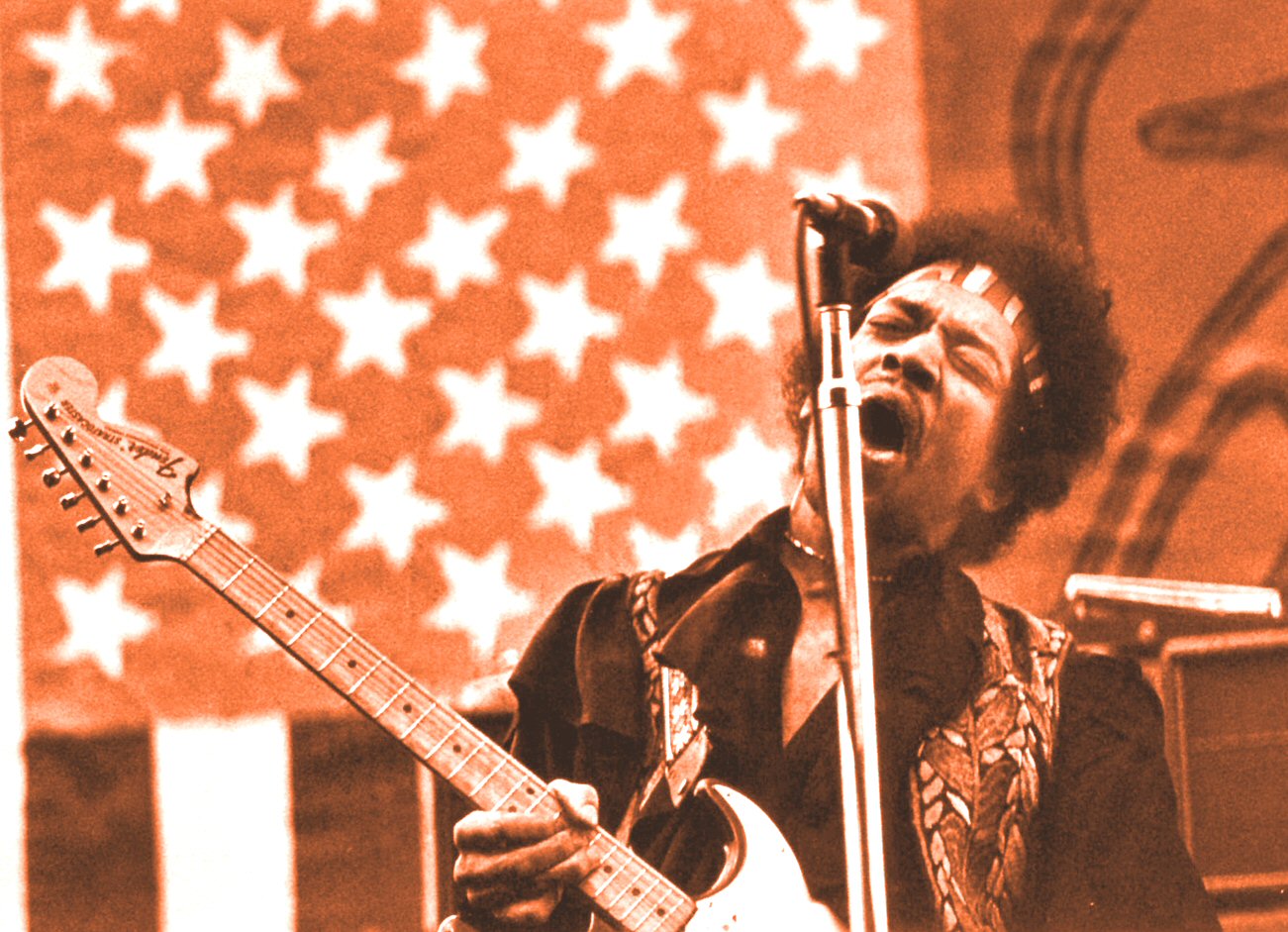 Cal Expo Fairgrounds With Mitch back on drums, Jimireplaces Buddy Miles' Machine Gunfalsetto with duplicate feedback peals.The effect is a synthesized electro-ghostof Band Of Gypsys' vocals! Then a "new"Foxy Lady is debuted. With Billy Coxthumping earthquake bass, Jimi doublesthe tempo and accents the upbeat. Theresult is a manic swing absent from allFoxy tracks prior to Sacramento. Forthe rest of his days, Jimi maintained thissouped-up Lady arrangement.Sacramento also marks the first gigwhere Jimi alters his Purple Hazechords by adding an augmented 9th tothe upper voicing of the G and A chords.Quick rhythms ring upbeat slap-backs. Astreamlined Haze made slicker for thetour. Sacramento went down as smoothas could be. For this second stop on theroad, Jimi hit the roof in peak commandof dynamite new tunes. Eyewitnessaccounts confirm lots of classic theatrics,including a Chuck Berry "duck walk." Butstage-play aside, the evidence reveals hekept the music itself superb throughout.
Sacramento '70 Spanish Castle Magic The Jimi Hendrix Experience Outdoor Experiment at Cal Expo Sunday, by most measures, must be considered a success...It was cloudy, cold, and windy in the grandstand but the approximately 17,000 spectators, mostly in their 20s, kept warm dancing to the music. Just before the show started, hundreds of improvised Frisbees came flying down from the second balcony of the stands and they were kept in motion during most of the concert. Hendrix kept the crowd moving to the sound of his amplified electric guitar music and when he did Foxy Lady the audience burst into cheers...For his finale Hendrix plucked the strings with his teeth. Dave Hatfield - Sacramento Bee, April 27, 1970 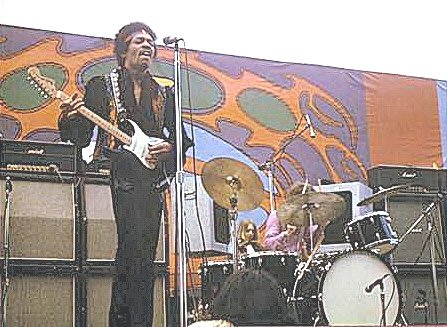 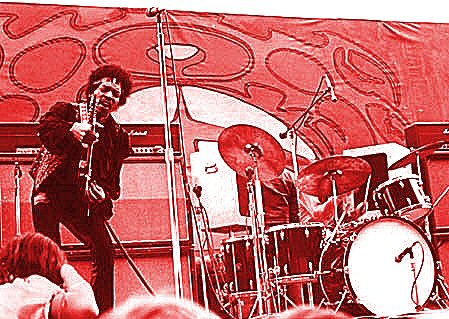 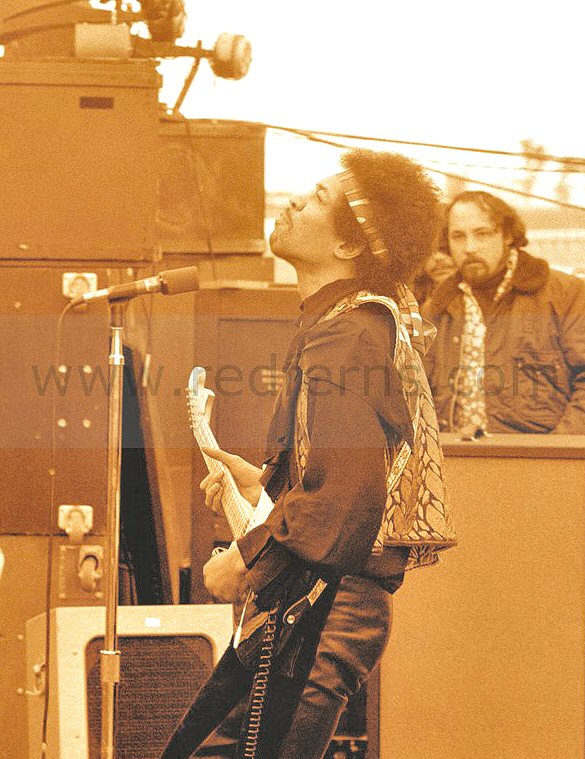 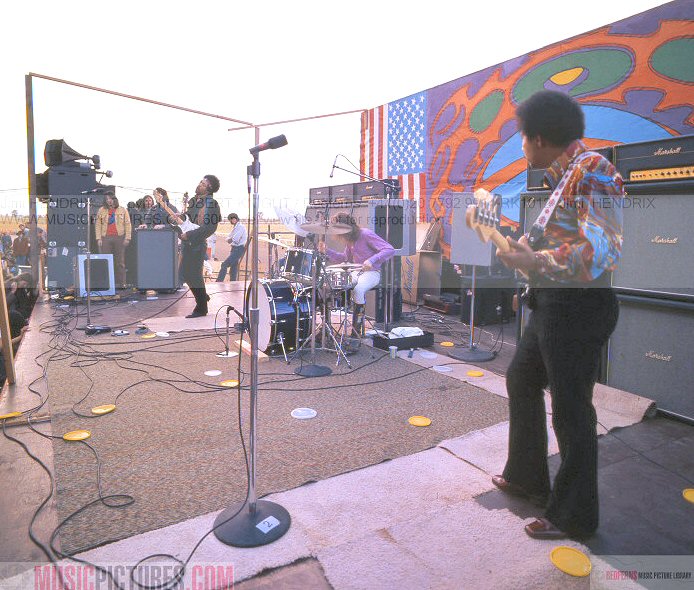 The next stops, in Milwaukee andMadison, WI, produced bootlegs of full-tilt music. Jimi played on a roll transcending any other concert streak in thecollection, and it didn't stop in Madison. 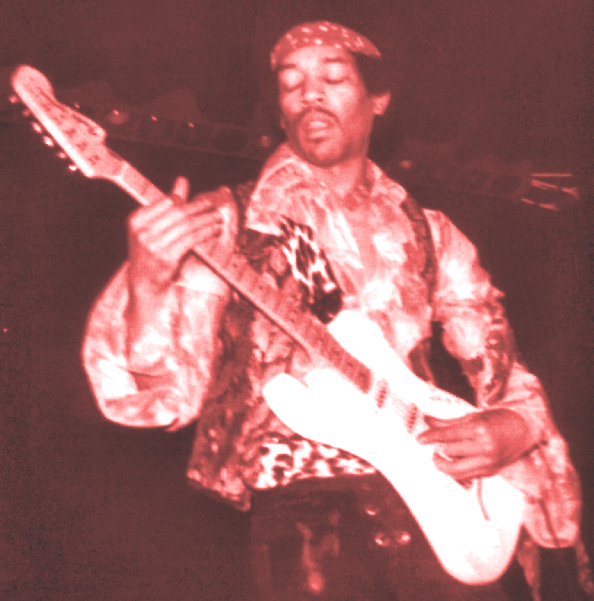 Madison, WI - May "1970" "Out-of-sight" is the only way to describe the Jimi Hendrix Experience that took place at the [Madison] Dane County Memorial Coliseum Saturday night...gave a superb performance that made people bounce in their seats and clap their hands to his beat…Jimi treated his enthusiastic audience to the blues, rock, and acid rock. He changed guitars six times and even played with his teeth, taking great care to make sure each instrument was well tuned, he explained to his audience, 'Gotta make sure all the goodies is right for ya.' Jimi was very personable throughout the performance. He talked to the audience about the meaning behind his songs, Bobby Seale [Black Panther trial], and Cambodia. To say that he performed to the utmost still cannot convey the experience that the audience underwent. He did everything from playing the guitar between his legs to playing it behind his head. The audience today is very much a part of the actual performance that is seen on stage. A young man in the crowd hollered out to Jimi, "What can we give you?" his reply was "a joint!" In trying to describe further the Experience, it's hard to see whether his guitars were an extension of him, or vice versa. His facial expressions further illustrated the sounds of his guitar, pain and joy could all be clearly seen and felt. Jimi asked the audience to stand up while he played his own rendition of the Star Spangled Banner. During the song's instrumental, sometimes it vibrated like a machine gun, and then his body would writhe as if receiving the bullets. The audience just never sat back down. He received a standing ovation and the crowd yelled for more. Charlene Harris - Wisconsin State Journal, May 4, 1970 Madison, WI 1970 Dave Wagner - The Capitol Times, May 4, 1970 (continues...) .
[NOTE: Please be aware that for years the owners and staff at the Yahoo search engine have artificially/surgically removed this rockprophecy.com website from all listings under the words "jimi hendrix." Following the example of Paul Allen, the owners of Yahoo are intent on concealing the insights and research of Hendrix scholar Michael Fairchild, out of sheer pathological jealousy. - James Sedgwick]
|
| © 1992 First Century Press. All Rights Reserved. Contact Us |